


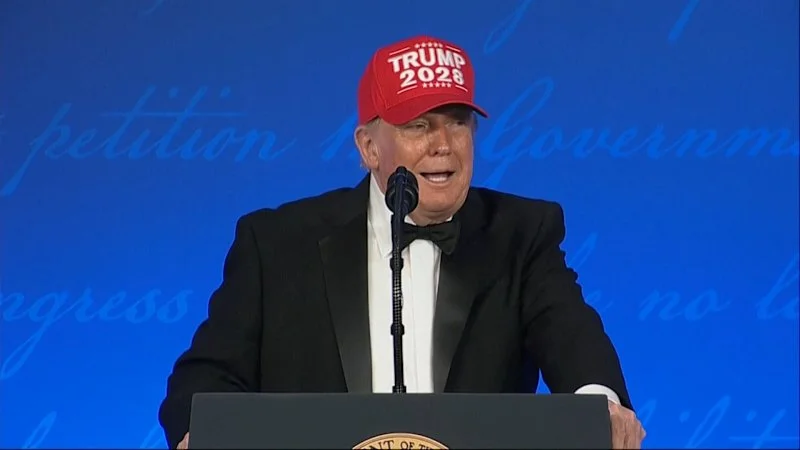
Donald Trump announced on July 25, 2026 that he will run for president again, setting up a claim that collides immediately with the constitution. The announcement was updated minutes later, but the basic fact remained unchanged: he is telling voters he wants another turn at the White House.
That is why Trump Third Term is drawing attention now. Readers are not just seeing a political declaration; they are seeing a bid described as constitutionally problematic, which turns a campaign move into a legal one. The timing matters because the announcement is new, the reporting is current, and the challenge is not about polling or party strategy. It is about whether the move can stand at all.

What makes the claim sharp is the absence of anything else around it. No details were provided about a campaign launch, a legal theory or the path Trump would use to press ahead. Instead, the announcement lands as a bare assertion, and the constitutional objection hangs over it without being explained. That gap matters because it leaves the central question unresolved: if he has announced the run, what part of the constitution is said to block it?
The result is a story built less on politics than on collision. Trump has made the declaration, but the reporting frames it as one that would breach the constitution. Until that legal issue is identified, the announcement is both the news and the dispute, and the next step is not another slogan but an answer to whether the bid can exist under the rules it appears to challenge.
