


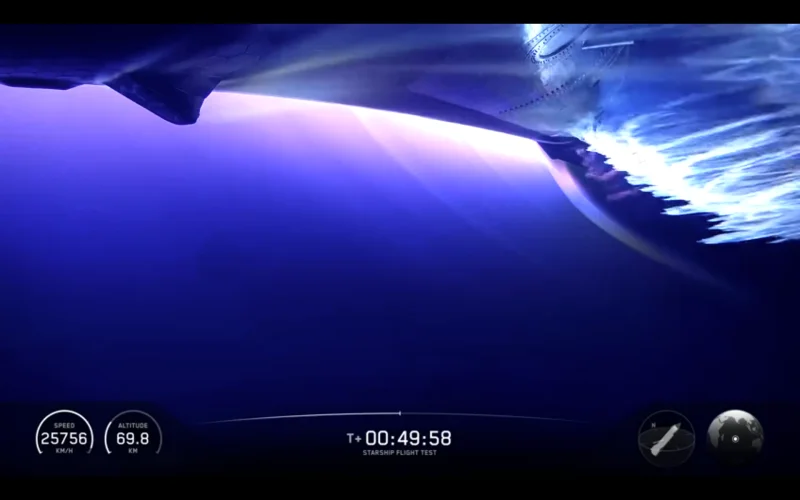
SpaceX targeted Friday, July 24, for a second attempt to launch Starship Flight 13 after waiving off a July 23 try because of weather. The company set a 90-minute window to open at 5:45 p.m. CDT.
The retry came after a stretch of work on Booster 20, the Super Heavy stage that had already been through a post-ignition abort on July 16. On-screen telemetry showed four engines that apparently did not ignite before the abort, and Elon Musk later said at least two Raptor engines needed to be removed after the hard engine stop. By July 21, Booster 20 was back at Pad 2, and the next day SpaceX loaded it with liquid oxygen and liquid methane before draining it again, a sign the vehicle was moving through another round of checkout before flight.
SpaceX then said additional preflight testing on Super Heavy was complete and that preparations to launch Starship were starting as soon as July 23. Ship 40 returned to the pad on July 22 and was stacked on Booster 20 that evening, putting the full stack back together for the 2nd attempt. For readers searching the SpaceX Starship Flight 13 launch now, that sequence is the reason the flight matters: it is the next checkpoint after an abort, a weather delay and a week of engine replacement work.

Flight 13 was supposed to carry 20 Starlink V3 satellites from Ship 40, with SpaceX saying they would extend solar arrays and antennas and try to connect to the larger Starlink constellation through high-capacity lasers. The satellites were expected to follow Starship on the same suborbital path and to demise upon reentry about 20 minutes after deployment, which is what makes the schedule tight: the mission also called for a Raptor relight after the roughly 11-minute deploy sequence, followed by a boostback burn attempt for Booster 20 and a planned splashdown in the Gulf of Mexico.
That sequence is also where the pressure sits. SpaceX said the Super Heavy on this flight carried hardware changes meant to improve relight reliability, along with updates to engine alarms and aborts to fit the conditions seen in a multi-engine flight environment. It also said other engine improvements were meant to prevent the early shutdown seen during Starship Flight 12 in May, when five out of 33 sea-level engines on the booster kept it from making a nominal boostback burn and the startup sequence on Ship 39 left the directional flip off by about 90 degrees. Booster 19 was lost prematurely in that flight, so the July 24 retry was more than another launch window; it was a test of whether the fixes were enough to get a cleaner run from liftoff through the upper-stage demonstration.
The unresolved question is not whether SpaceX wanted to fly again on July 24. It did. The question was whether the weather, the engines and the restart sequence would finally line up long enough for Starship Flight 13 to leave the pad and prove the changes made after the abort were real.
