


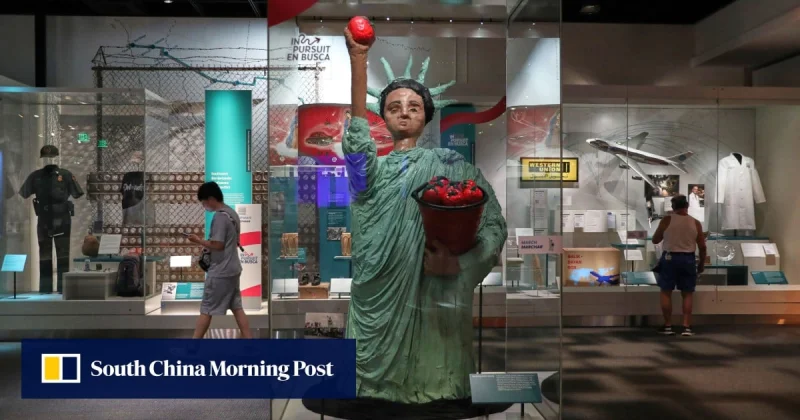
Donald Trump ordered temporary warning signs outside the Smithsonian’s National Museum of American History on Friday, directing federal officials to tell visitors that the museum’s exhibits should be renovated to reflect accurate information about America’s history. The signs are to go on public walkways outside the building, turning a dispute over museum content into something visitors will see before they even enter.
The order lands days after a Tuesday hearing in which Anthea Hartig defended the museum’s collection in starkly concrete terms. She pointed to the desk on which Thomas Jefferson drafted the Declaration of Independence, Abraham Lincoln’s top hat from the night he was assassinated, the Greensboro lunch counter and the gowns of the first ladies, a list meant to show that the institution is not dealing in abstractions but in the objects that carry the country’s past.

That is what gives the order its force. It does not simply repeat a complaint about the Smithsonian; it asks federal officials to install temporary signage that warns visitors the museum needs renovation because it is not reflecting accurate information regarding America’s history. The target is the National Museum of American History in Washington, one of the most visible places where the country explains itself to the public.
The clash is sharper because the criticism and the defense were aired in public, back to back. Tim Burchett said in Tuesday’s hearing that he felt the Smithsonian has become infected by a woke ideology to highlight American oppression. Melanie Stansbury pushed back, saying the Trump administration has launched an unprecedented effort to interfere in how American history is told, researched, interpreted, presented and taught. Their remarks frame the fight as one over power, not just plaques and labels.
Trump’s order does not identify which exhibits or statements are supposedly inaccurate, and that absence matters. The museum’s defenders can point to enduring artifacts with clear historical weight, while the order treats the broader presentation as the problem. For now, the consequence is straightforward: federal officials have been told to put the warning in place, and visitors may soon meet this argument before they meet the exhibits themselves.
