


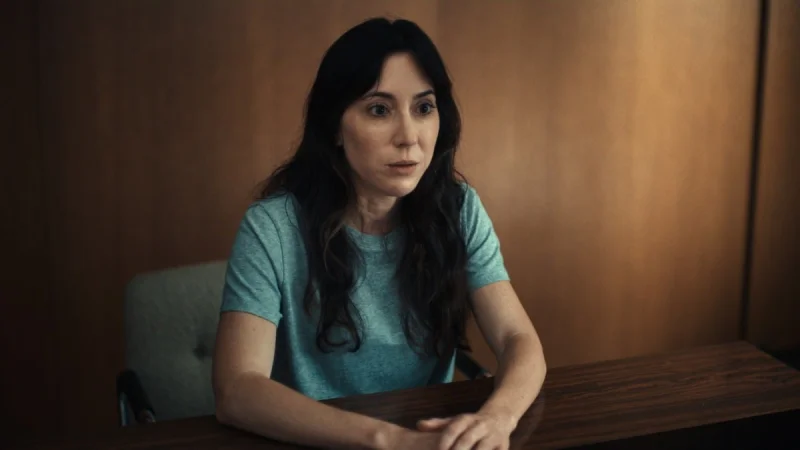
Netflix’s A Toxic Love Story reopens the case of Ian Diaz and Angela Connell Diaz by showing how quickly a threat investigation turned into something far stranger. Michelle Hadley was arrested after messages from an account called Lilithistruth targeted Angela Connell Diaz, her home and her unborn twins, but the documentary later pushes the story back to an earlier deception that changes what those threats may have meant.
That is why people are searching the case now. It is not just another true crime retelling. It is a case in which a woman spent 88 days in custody on a million-dollar bond after police treated her as the source of the threats, only for the documentary to show that the story around Angela had already been corrupted years earlier. For readers coming to Ian Diaz through the documentary, the central question is no longer simply who sent the emails, but how a police case built around them could have been so wrong for so long.

In 2016, Ian and Angela were newlyweds living in Anaheim, California, minutes from Disneyland, and Angela was expecting twins. Messages from Lilithistruth threatened her family and home, and police did not step in until the harassment escalated into an attempted sexual assault. A stranger answered a Craigslist ad that suggested Angela was available for a rape fantasy in the Diaz condo, and after that 911 call, police arrested Michelle Hadley. In an interview heard in the film, Hadley appears to admit to writing the Lilith emails, which is part of what made the arrest seem settled at the time.
But the documentary does not leave the case there. It moves back to 2013 in Huntington Beach, where Angela Connell Diaz, then known as Angie, was trying to impress a new beau and his circle of friends. The film says she faked a cancer diagnosis using photos of chemo treatments pulled from Google and a knit cap to hide her long hair. Mary Bukovskis describes the fraud and shows cellphone video of an intervention in which friends told Angie, “You don’t have cancer!” Angie runs away during that confrontation, and the revelation lands hard because it undercuts the clean version of events that first sent Hadley to jail.
The unresolved part is what police saw that led them to another suspect, because the documentary does not spell out that evidence. What it does make clear is that the original story was never as simple as it looked: one woman was jailed for nearly three months, another had already built a lie around cancer, and the threats that seemed to explain everything now sit inside a case defined by misdirection from the start. Toxic Love Story On Netflix revisits the case of Michelle Hadley, Ian Diaz and Angela Connell, but the final question it leaves behind is how much of the first investigation was built on the wrong assumptions entirely.
