


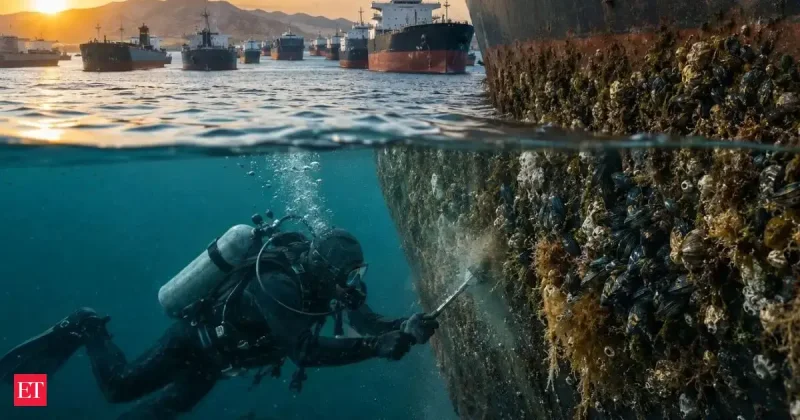
Nearly fifteen hundred ships are still stuck in the Persian Gulf after fighting closed the Strait of Hormuz, and the longer they sit there, the more they turn into moving rafts for marine invasive species. What began as a shipping backlog has become a science news warning about what can happen when a large fleet is left idle in warm waters.
The concern is not abstract. Organisms build up on hulls while ships wait, and that growth can drive fuel consumption higher once the vessels move again. Scientists are now urging stricter rules to keep that buildup from helping trigger a major bioinvasion event if the ships are eventually released back into service.
The numbers matter because of scale. Nearly fifteen hundred vessels stranded in one waterway means there are nearly fifteen hundred chances for marine life to take hold, spread, and travel elsewhere on metal surfaces that were never meant to serve as habitat. In that sense, the ships are not just inactive; they are already functioning as breeding grounds for species that do not belong there.

That is what makes the situation more troubling than a simple delay. The closure of the Strait of Hormuz is the reason the ships are idle, but idleness itself is now part of the threat. The longer the backlog lasts, the more time organisms have to accumulate, and the more costly and risky each vessel becomes when it finally moves.
What scientists want is stricter control over those hulls before the fleet gets moving again. They are pressing for rules aimed at preventing organisms from hitching a ride, because the worst-case outcome is not only higher fuel use but a major bioinvasion event spread by ships that were stranded for reasons that had nothing to do with science and everything to do with fighting.
For now, the unanswered question is how much damage will already have been done by the time the corridor opens again. The ships are stranded today, but the biosecurity problem may last far beyond the closure itself.
