


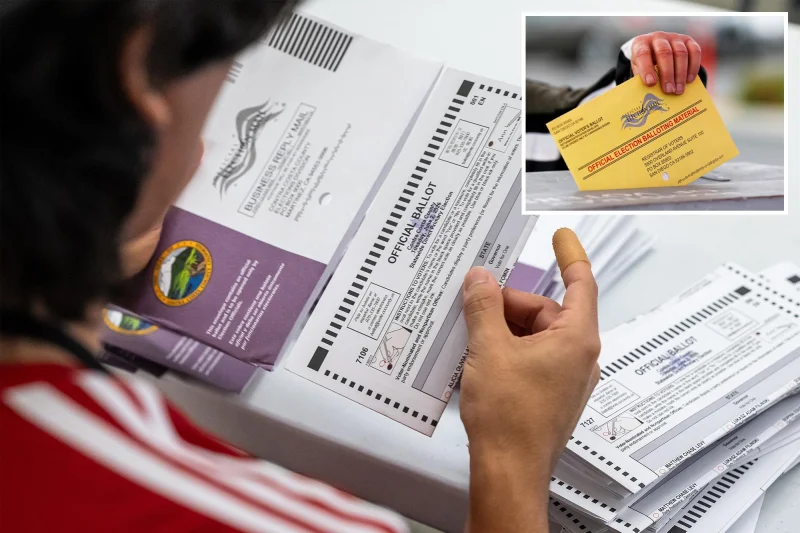
California rejected 148,241 mail ballots in its June primary, and lateness was the biggest reason. Of those rejected ballots, 93,479 were set aside for arriving too late or carrying a postmark that put them outside the counting rules.
The scale matters because California still counts ballots for days after Election Day, and voters can have a mail ballot counted if it reaches an election office up to seven days late so long as the envelope is postmarked by Election Day. Even with that cushion, the rejection rate for mail ballots in the June primary was 1.73%, up from 1.56% in 2024, when 108,982 mail ballots were rejected, and from 105,818 voided in 2022.

Kim Alexander said ballots rejected for lateness are mainly being postmarked too late to count, not simply arriving too late. That distinction matters because it shifts part of the problem away from voters who mailed ballots late and toward how the mail is handled before the envelope gets stamped. The reported that voting experts suspect ballots received after Election Day may be getting postmarks that make them ineligible even when the delay is tied to processing, not to a voter’s decision to wait.
That concern has been building for months. In January, a group of mostly Democratic U.S. senators wrote to the U.S. Postal Service about mail-processing changes that could affect postmark dates in an election year. Updated Postal Service policy says a postmark may not show the first day the Postal Service received the mail, but instead the day it was handled in one of its processing centers. With processing centers farther from some communities after recent consolidations, the timing gap can matter more than it used to.
Mindy Romero said the larger number of ballots set aside for lateness compared with recent elections “does really demand the question why this is happening.” The June figures suggest the answer is not simply that more voters missed deadlines. Late-arriving ballots were the main driver, but the postmark rules and the way mail moves through the system are now part of the count as well. That leaves California with a familiar problem in a new form: a state that gives ballots seven extra days still saw lateness become the largest cause of rejection in the June primary.
