


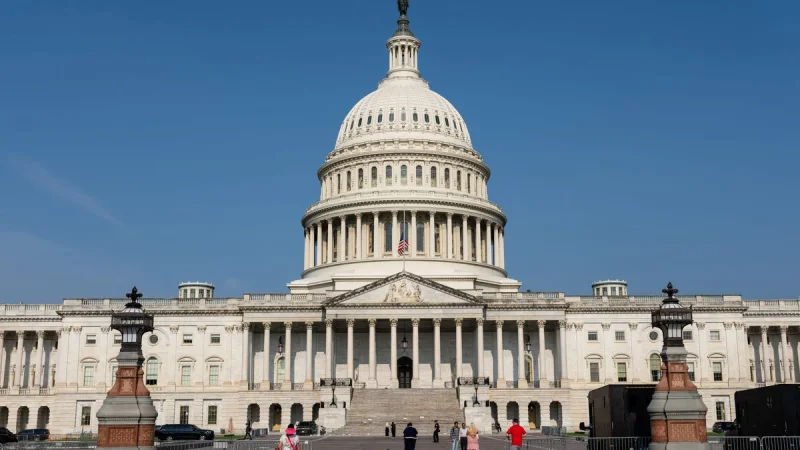
The House passed a bill on Wednesday afternoon that tied a congressional stock trading ban to federal voter ID rules, and the vote split House Democrats. The package moved forward despite significant opposition from Democrats to the final version.
The timing matters because lawmakers had spent months debating each issue on its own, then fused them into one vote with the aim of sending the bill to the president before the August return-to-district period. That made the floor fight less about one policy at a time and more about whether the House would accept a single package that forced members to take both positions together.

Rep. Zach Nunn said the two issues “go hand in hand,” and argued the combined bill could still reach the president before lawmakers leave Washington, D.C. for the August break. Rep. Stephanie Bice said members of Congress should be held to the highest standards of transparency and accountability, calling the legislation an important step toward restoring trust in Congress. Together, their case was simple: lawmakers should not be able to profit from the markets while writing the rules for everyone else.
But that clean message ran into a sharper political calculation from Thomas Massie. On X, he said Republicans added voter ID not to advance that part of the bill, but to make Democrats vote against the stock trading ban and use the fight in the Nov. election. Massie also argued that a stand-alone stock trading ban could win a large bipartisan majority and had a real chance of passing in the Senate, which is exactly why the merged package drew so much scrutiny from Democrats who wanted the ethics bill separated from the election-law fight.
That split leaves the House with a bill that passed, but not with the broad consensus its supporters wanted. The stock trading ban had bipartisan support in negotiations, and public polling has shown strong support for voter ID, including a Pew Research Center survey in August 2025 that found 83% of U.S. respondents favored requiring government-issued photo identification. Even so, the final compromise turned two popular ideas into one partisan test, and the next question is whether the Senate will take up the package as written or strip it back into pieces.
