


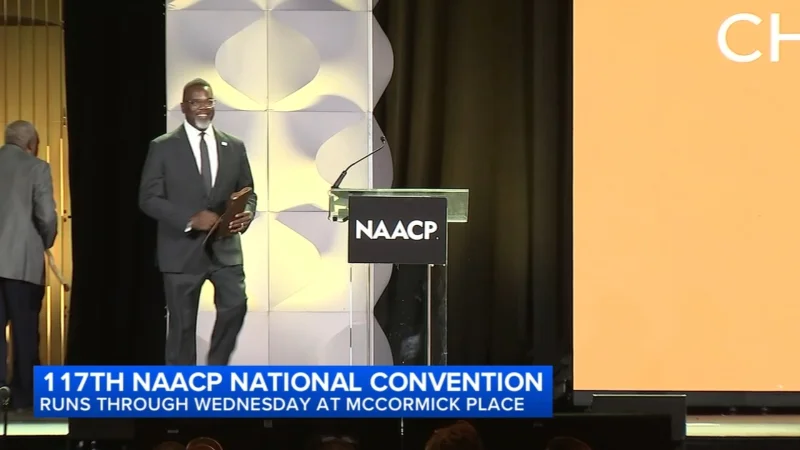
The NAACP moved to tighten its alliance with organized labor on July 20, saying it will work more closely with unions as the election nears. Derrick Johnson and Leon Russell announced the shift during a special labor-oriented session at the NAACP convention in Chicago.
Johnson said the effort goes beyond the usual fight over pay and contracts. He said the group and labor need to keep their eyes on the same prize, and argued that the right wing is using pension dollars against workers in investments while refusing to back homes or businesses in communities of color. Russell put the call more bluntly: union leaders and NAACP branches, he said, have to stop talking and start organizing. He also said local chapters should be connected directly to local union leaders.
The timing matters because the NAACP is trying to turn a long-standing historical partnership into a more active political force before November. Johnson and Russell described civil rights and labor as natural allies, but they also acknowledged that support flowing the other way has not always been as visible, especially at the local level. The push is meant to change that by making branches and union locals work together instead of separately.
That gap is real even after recent changes at the top. Only recently have three international union leaders joined the NAACP board, including Randi Weingarten, who leads Teachers/AFT, and Becky Pringle, who leads the National Education Association, the nation’s largest union. Weingarten heads the nation’s third-largest union. Before them, Bill Lucy was the most prominent union leader on the board, and he came out of AFSCME and helped build labor’s constituency groups for African-American workers. He was also a key force behind Dr. Martin Luther King’s civil rights campaigns.
The history Johnson and Russell invoked runs deep. A. Philip Randolph, president of the Brotherhood of Sleeping Car Porters and the first African-American majority union president, helped force FDR into integrating defense industries, and one speaker recalled that King was murdered in 1968 while leading labor’s support for unionization of mostly Black sanitation workers of Memphis, Tenn. Chicago carries its own weight in that history too: the city was where a first fully documented case of financial discrimination, redlining Black loan applicants with the same background and finances as white applicants, was recorded in 1961.
What the NAACP and labor will actually do next is still the open question. Johnson said the cooperation could take a variety of forms, and the clearest immediate answer is that local chapters and union locals are being told to work the election together instead of waiting for a single national campaign to define the effort. If the alliance becomes real on the ground, it will show up there first.
