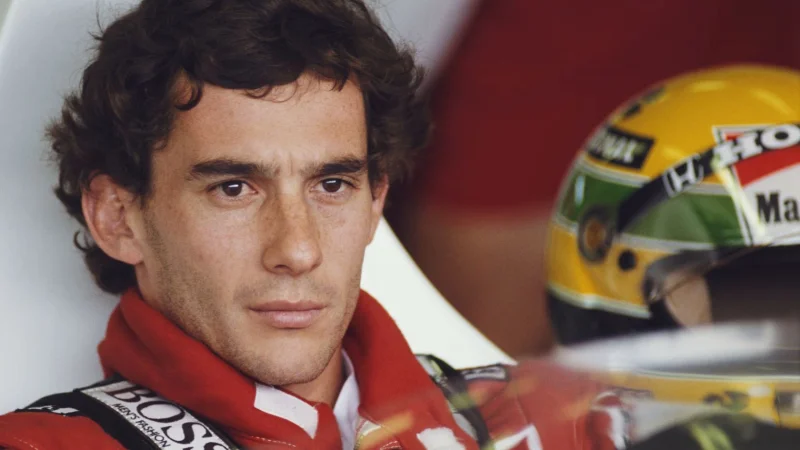
Caramulo Museum will open its Magic Formula exhibition on 18 July with around 30 Formula 1 cars on public display for the first time in Portugal, including Ayrton Senna’s Lotus 97T and Nelson Piquet’s Lotus 100T. The show begins at 10 am and is scheduled to run until 18 October.
Salvador Patrício Gouveia said it is the largest exhibition the museum has ever mounted, and the scale helps explain why: the collection brings together cars from museums, collectors and Lotus itself, along with original artefacts such as costumes, helmets, trophies and gloves. It also folds in pieces linked to Nigel Mansell, Jean Alesi, Heinz-Harald Frentzen and Michael Schumacher, giving the display a reach that stretches well beyond one team or one era.

The Lotus 97T is the car with which Senna won his first Formula 1 victory at the 1985 Portuguese Grand Prix at Estoril Autodrome in Cascais, and Gouveia said it remains a car of major importance in Formula 1 history and in Portugal. The exhibition is being staged at the Caramulo Museum in Tondela, in the Viseu district, a museum inaugurated in 1959 and now using this show to push deeper into the country’s own Formula 1 memory.
That history is not confined to the cars that have travelled from abroad. Some of the vehicles were already in Portugal but had never been seen by the public because they were held in private collections, which is why the exhibition’s claim to be a first is more exact than it first sounds. The same display also brings in Nicha Cabral, Pedro Matos Chaves, Pedro Lamy and Tiago Monteiro through cars and other pieces tied to their careers, including Lamy’s Lotus 107B and Monteiro’s Jordan EJ15, the car he used to finish third at the 2005 United States Grand Prix.
For visitors, that means a rare chance to see a broad Formula 1 line-up in one place and to trace how Portugal has appeared inside the sport as well as beside it. The exhibition closes on 18 October, and the next few months will decide whether Magic Formula is remembered as a novelty display or as the point at which the Caramulo Museum turned a private motorsport past into a public one.