


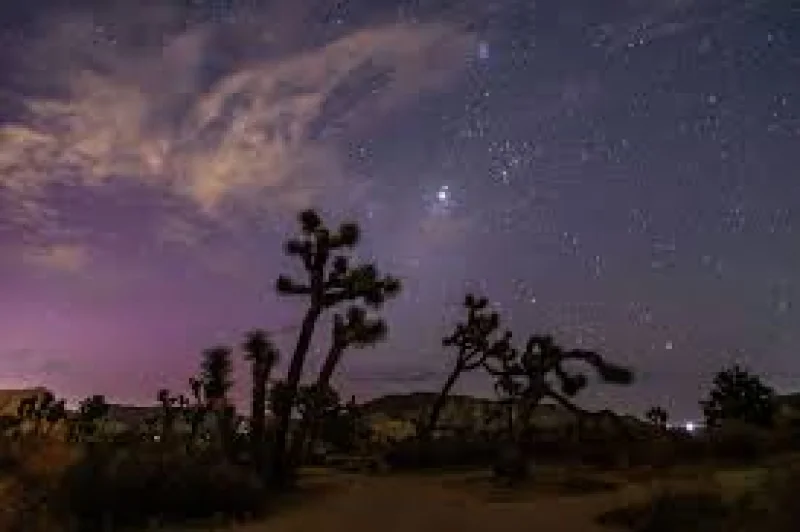
The Perseid meteor shower will reach its peak overnight on 12-13 August 2026, giving skywatchers their best chance of seeing one of the year’s busiest displays. The timing matters because the peak falls with a new Moon, which should leave the sky darker than it would be under a bright lunar glow.
For people searching for the Perseid meteor shower tonight, the practical question is not whether it will happen — it will — but how much of it can actually be seen. Up to 150 meteors an hour are possible at peak, though that number is a ceiling, not a promise. The shower runs from 17 July to 24 August, but its most intense burst is compressed into the overnight peak, when Earth is crossing the densest part of the debris stream.

The best chance of seeing the display comes in dark, clear skies with a wide open view and as little light pollution as possible. You do not need binoculars or a telescope. In the northern hemisphere, the prime viewing window is between midnight and an hour before sunrise, when the radiant in Perseus is higher and the meteors are easier to catch as they streak across the sky. Skygazers should give their eyes up to 15 minutes to adjust to the dark before looking up.
The new Moon helps, but it does not remove every obstacle. Cloud cover can still wipe out the view, and a northerly wind is expected to draw more North Sea cloud across northern Scotland and towards eastern coasts, reducing viewing chances there. That leaves inland and western parts of the UK with the better odds, even if the shower itself is visible across much of the northern hemisphere.
The reason the Perseids draw so much attention is simple: they are fast, bright and active, and they often produce fireballs that stand out against the night sky. The shower appears when Earth passes through the debris of Comet 109P/Swift-Tuttle, and the tiny particles burn up in the atmosphere as streaks of light. The next confirmed moment to watch is the overnight peak on 12-13 August 2026 — and the clearest skies will decide how many of those meteors actually make it to the eye.
