


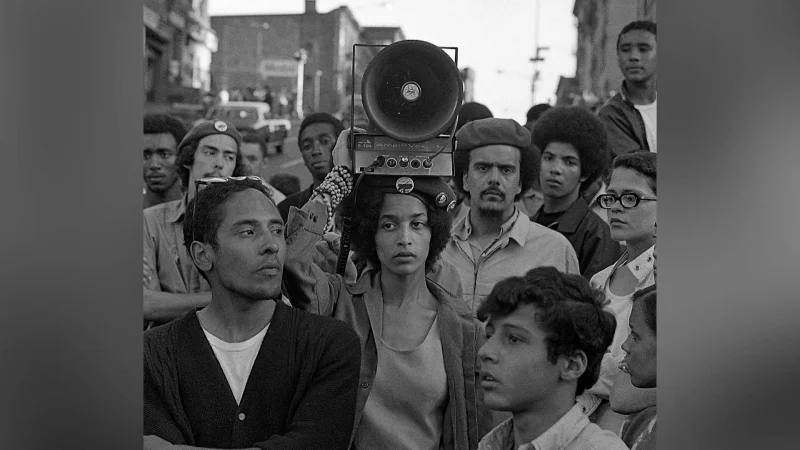
Denise Oliver-Vélez, a central figure in the civil rights movements of the 1960s and 1970s, has died at 78. She was the first woman elected to the Young Lords Central Committee and later became a pioneering figure in public radio and teaching.
Her death drew attention because her work had not faded into history. Amy Goodman said Oliver-Vélez remained a longtime activist, organizer and educator, and that her work continued until just days before her death. That detail gives the news its force: this was not the loss of a retired figure looking back on a distant past, but of someone still active in public life at the end.
Juan González said Oliver-Vélez helped develop many of the Young Lords' Serve the People programs and helped shape and write key literature the group produced. He said she was never afraid to speak her mind and that she helped found the Young Lords in New York, where she rose into top leadership as minister of finance and then of economic development. He also said she played a pivotal role in the design and production of Palante and the group's weekly radio program on WBAI.
Oliver-Vélez was a member of the Black Panther Party and later became the first Black female program director in public radio. She also taught at SUNY New Paltz. In a 2019 appearance on Democracy Now!, she described the Young Lords as a bridge, saying they broke down barriers between groups dealing with their individual communities. She said about a third of the population in El Barrio was African American, that there were marriages between Black Americans and Puerto Ricans there, and that some people identified as both Black Americans and Puerto Ricans.
That helps explain why her life mattered beyond any one organization. The Young Lords were modeled on the Black Panther Party, but Oliver-Vélez's own work moved across organizing, writing, radio, scholarship and teaching. Her death marks the end of a career that linked those worlds, and it leaves one clear question unanswered: what caused it is not known publicly.
