


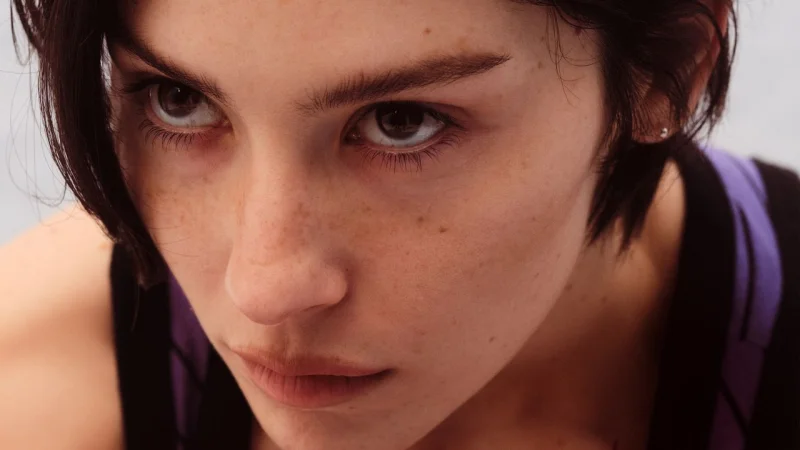
Pitchfork has published a review of Gracie Abrams' Daughter From Hell, and the new album lands with a clearer aim than many sophomore-era blurbs ever manage: it is trying to push her writing away from diary entries and toward something more unsettled. Abrams has already said the record is “a little bit less diaristic, and mildly more existential,” and the review takes that shift seriously.
That matters now because Abrams is no longer being introduced as a breakout with promise; she is being measured as an artist with a commercial track record. Her debut EP minor arrived in 2020, The Secret of Us debuted at No. 2 on the Billboard 200 in 2024, and the bonus track “That’s So True” became a top 10 hit. Against that backdrop, any change in her writing reads less like a stylistic experiment than a statement about where she wants the project to go next.
The album also keeps Aaron Dessner in the frame. He has worked with Abrams since This Is What It Feels Like in 2021, and he is again a co-writer and producer here, shaping songs with acoustic guitar, soft percussion, tender strings, fingerpicked guitar and piano. The result is said to feel more grounded and more nuanced than The Secret of Us, even as it stays close to pop songwriting and a melancholy indie-folk cast.

What gives the record its charge is that the move toward existential writing does not erase the old impulse to explain herself. The review hears plenty of attempts to say what it feels like to be Abrams, or to be around her, with imagery of sickness, numbness, aching, bleeding and burning up, plus pain carried for a whole life. It also finds auditory hallucinations, shadows, apparitions and the ache of being distracted by loved ones who are no longer there. That is not a clean break from the past; it is a deeper version of the same self-interrogation.
Some of the strongest examples are musical as much as lyrical. “Mews” is framed as a smoky ballad about not noticing a relationship’s downturn until it is too late. “The Knife” is built around high notes so breathy they are almost translucent. “Good Reason” and “I Love You, I’m Sorry” move in 3/4 time, while “Look at My Life” plays like a night-by-night spiral, capped by the line, “Do I look high functioning or/Is my facade crumbling?” Those details make the record feel less like a posed reinvention than a sharpened version of the same emotional terrain.
That is the useful friction in Daughter From Hell: Abrams says she is writing less about the self on the surface, yet the songs keep circling back to the self with even more precision. The unresolved question is not whether she has changed, but whether this more existential mode can hold as the songs move beyond the first wave of release and into the longer run of her career. For now, the album suggests that the answer is yes, and that the next chapter is already underway.
