


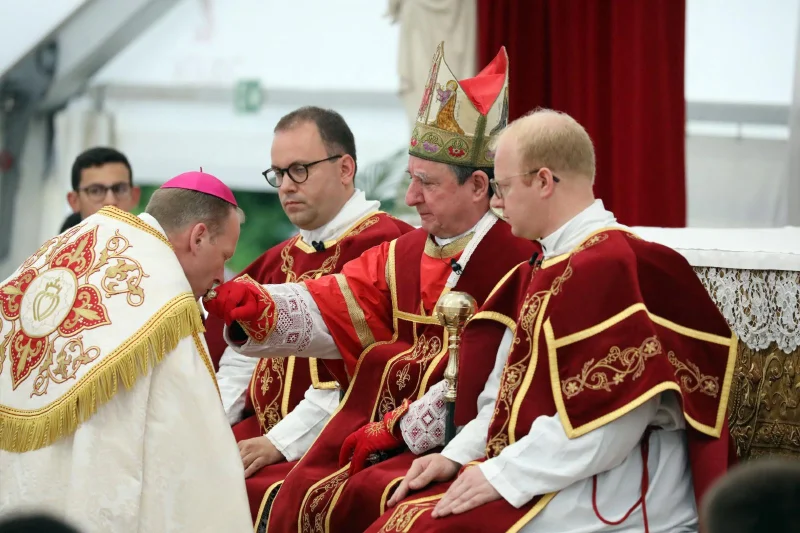
The Vatican declared the Society of St. Pius X to be in schism on July 2 after the group consecrated four bishops without the papal mandate, and the dispute has now landed in Kenya’s Catholic life. Father Pierre Champroux answered on July 12 by rejecting the break with Rome and insisting the society still belongs inside the Roman Catholic church.
That response matters because the society is not a remote European relic. It runs one international school, a congregation of women religious and some local priests out of Nairobi, with an established presence in Lovington under the names Holy Cross Catholic Church and Holy Cross Church and Priory. Its public face is also its appeal: the exclusive Latin Mass and other pre-Vatican II traditions that draw worshippers even as they put it at odds with the Vatican.
The immediate reason this story is moving now is that the Vatican’s July 2 ruling was followed quickly by a July 9 pastoral letter from Archbishop Philip Anyolo. He urged Kenyan Catholics to remain in communion with the pope and shun SSPX and its activities, then barred priests from celebrating Mass with SSPX clergy or inviting them to minister in archdiocesan parishes and institutions. That makes the conflict practical, not just doctrinal, because it changes who can appear at the altar and under what authority.

Anyolo also drew a line between attachment to tradition and defiance of Rome, saying that love for the sacred liturgy or the Latin Mass is not schismatic by itself. The grave problem, he said, is the refusal of full communion with the Roman Pontiff, rejection in practice of papal authority and the creation of a parallel ecclesial life outside canonical communion. He warned the faithful not to be misled by the use of the name Catholic or by external forms of Catholic worship.
Champroux pushed back hard. In his July 12 release, he said the society’s main mission is to provide “sound doctrine” and “all the sacraments received from Our Lord Jesus Christ,” and he described SSPX as fully Catholic and attached to the See of Peter and to Pope Leo XIV. That is the friction at the center of the dispute: Rome says schism, while the society says fidelity.
The clash is not new. SSPX traces itself to Archbishop Marcel Lefebvre, and the Vatican’s move was described as the most serious rupture in the church since the July 1, 1988 excommunication after unauthorized episcopal consecrations. What is new is the speed with which the ruling has been translated into local church discipline in Kenya. The unresolved question is how far the Nairobi archdiocese will go in enforcing the ban and how many Kenyan Catholics will now be pushed to choose between the society’s traditional rites and communion with the wider Catholic church.
