


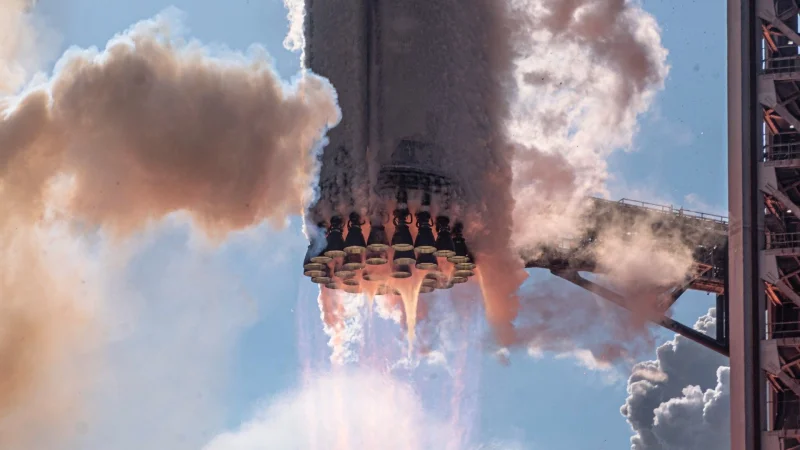
SpaceX is set to send Starship on its 13th test flight from Starbase in Texas on Thursday, with a 90-minute launch window opening at 5:45 p.m. CDT. The mission puts the spotlight on the Super Heavy booster as SpaceX tries again to tighten the performance of the third version of the starship system.
Helen Coster reported from New York that the flight is being watched now because it is the next scheduled step after Flight 12 ended in a hard splashdown. That earlier test, on May 22, was supposed to end with a sustained burn to a controlled landing in the gulf, but the booster’s directional flip was off by about 90 degrees after slight differences in engine startup at separation. Five of its 33 engines also failed to relight during the boostback burn, and the boostback ended early. The Federal Aviation Administration said there were no reports of public injury or damage to public property from the mishap.

SpaceX says the startup sequence has been modified to be more robust to timing variability and to help the booster flip in the intended direction. It also says the upcoming flight includes hardware changes to improve relight reliability, along with updates to engine alarms and aborts designed to match the conditions seen in the multi-engine flight environment. In practical terms, that means the company is trying to make the booster act more predictably when several engines come back online at once, not just in a clean lab-style run.
The test carries another first for the program. For the first time, Starship is set to carry 20 V3 Starlink satellites, which are meant to deploy, extend their solar arrays and antennas, and link with the larger constellation by high-capacity lasers before burning up on reentry into Earth’s atmosphere about 20 minutes later. SpaceX says that use of the third version is meant to greatly expand the communications network’s capacity and user speeds, even as Flight 12 showed how much work remains on the booster side.
That is the tension inside Thursday’s launch. The third version is the first capable of deep-space flight and is the one SpaceX plans to use for Artemis 4 astronauts on a moon mission set for late 2028, but the program still has to prove that its booster can light, flip and recover the way it is supposed to. Thursday’s window is the next chance to show that the fixes hold under flight conditions.
