


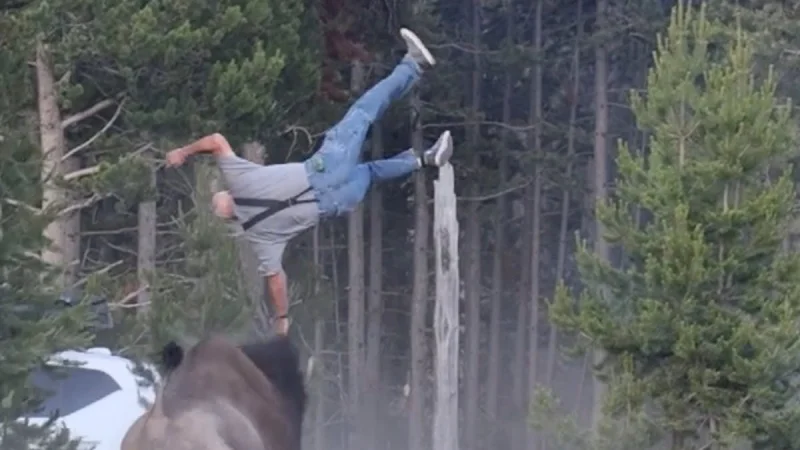
Yellowstone officials have decided not to euthanize the bull that seriously injured Carl Isom-McDaniel, saying the animal will remain in the park and that no management action will be taken. The decision comes after a violent encounter last week left McDaniel with multiple broken bones and sent him into surgery.
The question now is why the park drew that line after a bison tossed a visitor into the air in a viral attack that spread quickly online. The answer has not been spelled out in public detail, but the choice means the bull stays where it was found, even after the attack brought widespread attention to what happened in Yellowstone National Park.
Mike MacLeod, who captured the video, said he stopped filming and ran with other men to haze the bison away and render aid once he saw McDaniel in the air. He said neither McDaniel nor his grandson appeared to provoke the animal, even though the bull had already charged a group of teenagers before the grandfather and grandson encountered it while walking through the campground.
That is the part that makes the decision harder to square for many readers. The bull had already shown aggressive behavior before the final encounter, yet officials still chose no management action. In practical terms, that means the park is treating the incident as a dangerous but isolated wildlife encounter rather than a case that requires killing the animal.
McDaniel’s condition underscores how severe the attack was. He was seriously injured, required surgery and is recovering from multiple broken bones, but his first concern afterward was not his own pain. It was his grandson. MacLeod recalled the moment in a single question: “How is my grandson?”
For now, the bison remains in Yellowstone National Park, and the park has chosen restraint over removal after a video that turned a campground scare into a national talking point. What still has not been answered is the one thing that would explain the decision most clearly: why officials judged this bull should stay after already charging more than one group.
