


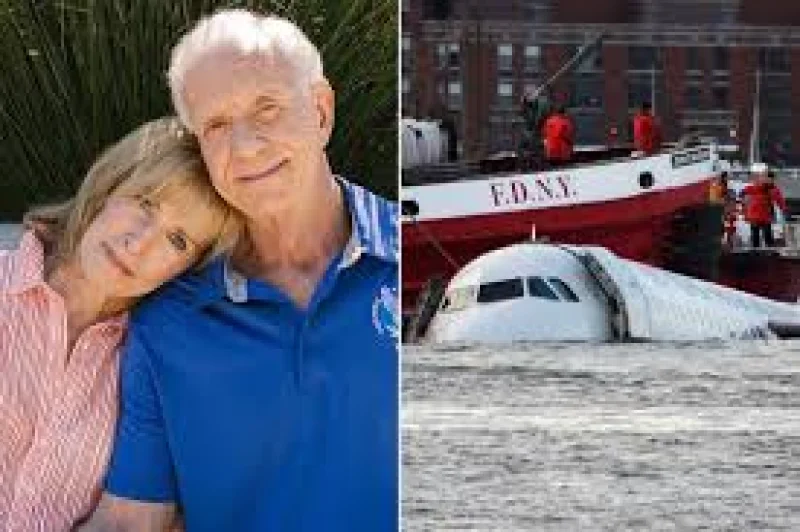
Chesley "Sully" Sullenberger said on Tuesday that he has been diagnosed with early-stage Alzheimer's disease, a personal disclosure from the pilot who became famous for landing US Airways Flight 1549 on the Hudson River in 2009. He said the condition is already affecting the edges of daily life, even as he described himself as at the beginning of a long journey.
Sullenberger said a name may not come easily to him, he forgets a story he has recently told and he does not sleep as well. The comments put a human face on a disease that is already shaping his days and arriving in public view through one of the best-known aviators in the country.

He is searching, now, for a way to speak about the disease before it speaks for him. Sullenberger said more than 7 million Americans are living with Alzheimer's and said he hopes others with the disease will also speak up. In a message that leaned on the same resolve that defined his flying career, he wrote that courage can be contagious, that now we need that courage to battle this disease, and that he is now part of a larger community with many of you, and we will be courageous together.
The diagnosis carries extra weight because Sullenberger is still identified with the Miracle on the Hudson, the 2009 emergency water landing after both engines of the plane began to fail soon after takeoff from New York's LaGuardia Airport. He and his crew decided landing at an airport was not feasible, carried out the water landing in less than four minutes and helped ensure all passengers and crew were evacuated and rescued by first responders. The event was later portrayed in the 2016 film titled "Sully," and Sullenberger went on to serve for years as an on-air expert for CBS News and as an advocate for aviation safety.
That history makes his new disclosure land differently. Alzheimer's is a brain condition that gradually causes problems with memory and other skills and is the most common cause of dementia, which means an early-stage diagnosis does not remove the disease's momentum or its uncertainty. Sullenberger has not said how quickly it is expected to progress for him, but he has already drawn a boundary around the moment: this is not a story about the past heroics of a pilot, but about the slow, personal work of living with a diagnosis that he says has only just begun.
