


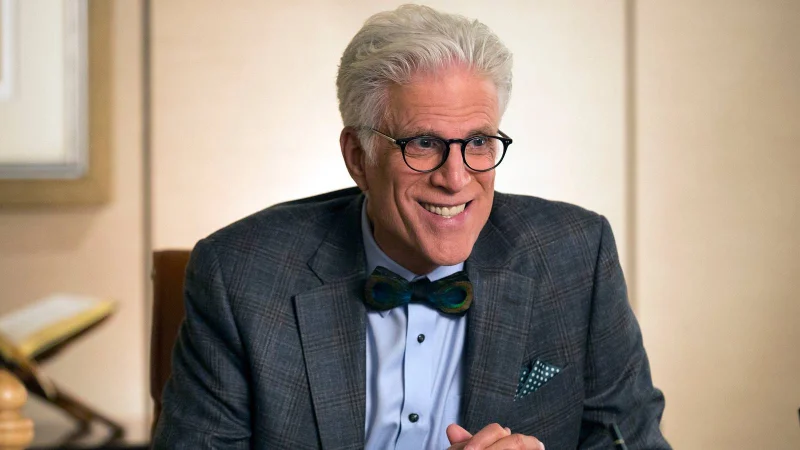
Nine years after The Good Place stunned viewers, Ted Danson’s Michael is still the role that best captures what the show pulled off: a warm, friendly figure who flips in the finale into something far darker. The reveal did not just recast one character. It recast the whole series, turning an afterlife comedy into a story that had been sitting inside Hell all along.
That is why people are still searching for Ted Danson now. The show opened with a strong first season, but the ending gave it a second life by making the first season itself the setup for a twist audiences were not meant to see coming. Kristen Bell starred alongside Danson, and the finale changed the rules of what a TV comedy could do without losing its comic shape.
The size of the reveal comes from the way it works on the page and on the screen at once. Eleanor had been in Hell the entire time, and Michael and his fellow angels were actually demons. Danson’s performance had to move across that line in a single turn, from a character who seemed kind and welcoming to one who was revealed as sadistic. That is a harder switch than playing two separate roles. It means the same voice, the same posture and the same easy charm suddenly have to read as a trap.

The twist landed because the series had earned trust before it broke it. Community and BoJack Horseman had already shown that comedy could be smarter and stranger than a clean joke machine, but The Good Place pushed the idea further by hiding its real premise in plain sight. Later shows such as Upload on Prime Video, Russian Doll and Miracle Workers kept working in that direction, each using afterlife ideas, time loops or angels to widen what a comedy could hold.
That is also where the friction lives. A show presented as light and witty was quietly building toward a finale that said the setting itself was Hell, which meant the friendly guide at the center was never what he appeared to be. The joke did not simply become darker. It became structural. Every warm exchange was reassigned once the audience understood who Michael was supposed to be.
What remains unresolved is not whether the finale worked — it plainly did — but how rare it still is for a comedy to pull off that kind of reversal and then keep its identity intact. The Good Place showed that a sitcom could surprise, unsettle and still feel like a comedy. Ted Danson’s Michael was the proof.
