


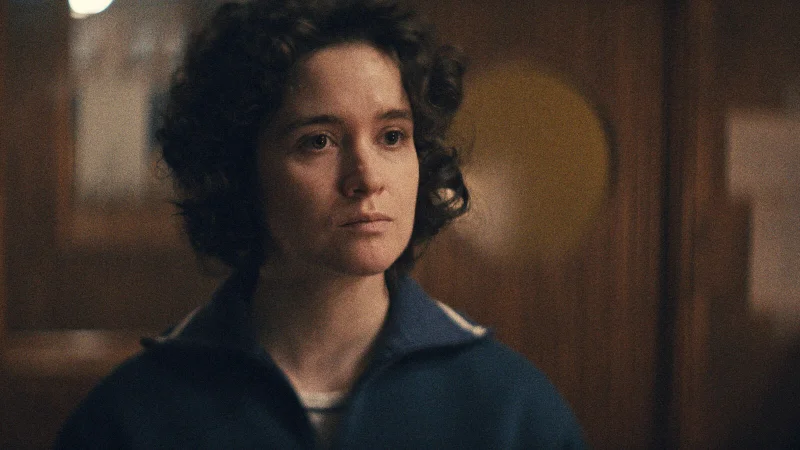
Star City’s first season ends by putting its strangest pairing at the center of the drama. In the finale, The Wolves, Anastasia Belikova and Sasha Polivanov are no longer just a convenience arranged by the state; their marriage has become the show’s emotional engine.
That matters now because Star City is a spin-off of For All Mankind, and the question of who belongs at the center of the story is finally settled by the last episode of the season. Belikova arrives with the kind of fame that turns private life into public policy: she became the first woman to walk on the moon in the show’s premise, then was told by a government representative that she could not be the example for Soviet womanhood as a single woman. She was also informed she would be married by the end of her upcoming press tour, with Polivanov already chosen for her.
The setup is blunt. Belikova is awkward and reserved. Polivanov is an outspoken playboy. On paper, they are an impossible match, which is exactly why the story works when they begin to matter to each other. By the second episode, A Bear on a Chain, Stasia is already willing to open up to Sasha about how badly she wants to go back into space. The show does not wait long to turn an arranged union into something that feels personal, and that is what gives the finale its weight.

That friction is the point. A marriage of convenience can stay mechanical if the writing keeps it at the level of policy, but Star City keeps moving the relationship toward something more intimate. The state wants a symbol. The audience gets a couple. The final episode, The Wolves, pushes that shift further, making the romance feel less like decoration around the space program and more like one of the reasons to watch.
Star City is set in an alternate-history Soviet Union in the late 1960s and early 1970s, and that setting makes the pressure on Belikova feel immediate rather than abstract. The season uses the space race backdrop to show how much of a woman’s life can be treated as public property, then lets the relationship with Polivanov challenge that control from inside the arrangement itself. In a year already crowded with TV romance, alongside Bridgerton and Off Campus, this spin-off finds its own lane by making a marriage chosen for appearances feel like the most human thing in the frame.
The unanswered question is not whether the pairing matters. It clearly does. The question now is how far Star City intends to carry a relationship that began as a political fix and ended the season as its heart. If the first season is the measure, the show has already decided that the impossible couple is the one worth following.
