


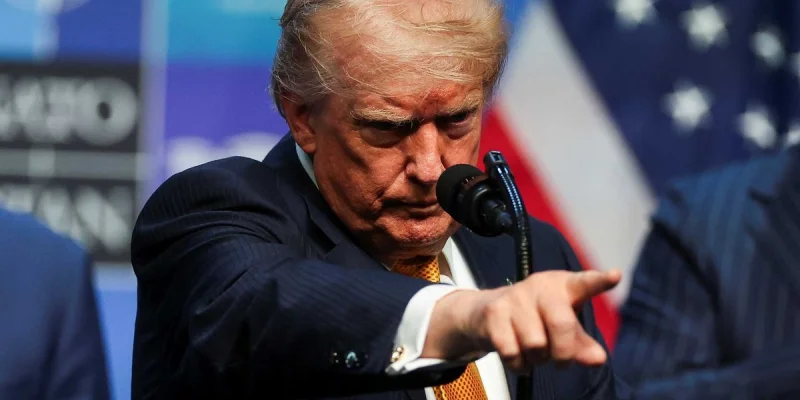
Donald Trump has leaned on a group of little-known civil litigators as his personal lawyers, and they have taken steps no president would normally ask of counsel on his own payroll. The lawyers have sued journalists, fought the government he leads and, in one case, become part of a legal orbit so tight that both sides of some disputes answer to him.
That is why the arrangement is drawing attention now. Trump is in his second presidency, and the legal shop around him looks less like a conventional White House setup than a network built on loyalty, with legal firepower aimed outward when it suits him and inward when it does not. The result is a presidency in which the Justice Department is under more direct presidential control than under previous administrations, making the line between defense and attack unusually thin.

One of the names at the center of that setup is Boris Epshteyn, a pugnacious longtime adviser whose importance, critics say, has never rested on legal mastery. Instead, his value is his direct relationship with Trump. A lawyer who has litigated against him described Epshteyn as someone who can be charming or bombastic, but not primarily a legal expert. Ty Cobb, who represented Trump during the Russia probe in 2016 and now criticizes him sharply, put it more bluntly: “Boris was a nobody when I was there.”
The unusual structure goes deeper than one aide. Many of the lawyers on both sides of proceedings involving Trump have previously worked together on his behalf, which blurs the normal adversarial line. In one especially striking episode during the 2024 transition, incoming White House counsel David Warrington recommended that Trump cut ties with Epshteyn after allegations that he tried to use his closeness to Trump to enrich himself. That warning did not stop Trump from keeping a legal circle built around personal trust, not institutional distance.
For readers trying to understand what comes next, the key point is not just who Trump hired, but how he uses them. His personal lawyers have shown a willingness to push cases that other lawyers might avoid, and his control over the Justice Department means the same president can effectively shape both sides of the fight. The unanswered question is not whether this setup is unusual. It is how far Trump will keep stretching a legal model in which the people arguing against each other may still be answerable to the same client.
