


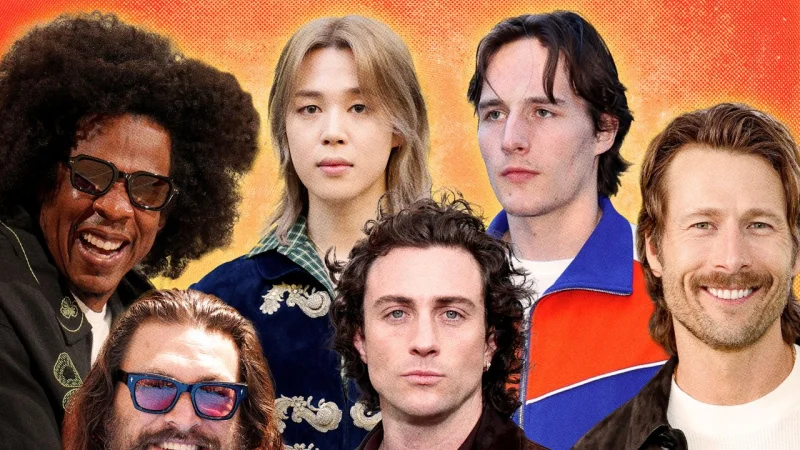
GQ is putting longer men’s hair at the center of 2026 style, and Tyler Kolek’s mid-length cut may be the clearest sign yet that the look has moved beyond fashion pages and into ordinary public sight. The NBA champion was photographed just two days after winning with a 90s-style middle part, the kind of grown-out shape that once looked accidental and now reads as deliberate.
The magazine’s list, titled The Best Men’s Hairstyles for Long Hair in 2026, According to Experts, treats that shift as more than a passing grooming whim. It says men are letting hair grow from all parts of their body in 2026, with mustaches and chest hair also back, and it frames longer hair as a way to express individuality instead of keeping a uniform look. That helps explain why the keyword Hairstyle is suddenly showing up in conversations that reach well beyond salons.
Celebrity sightings are doing most of the work here. Connor Storrie showed up at the 2026 Golden Globes with a grungy mini mullet, Oscar Isaac wore a similarly grown-out look in the second season of Beef, and longer lengths have also been visible at Paris Fashion Week and Wimbledon. A bunch of today’s hottest A-listers have also grown boy bangs, which pushes the trend away from one single cut and toward a looser idea of length, shape and attitude.
Sami Knight, the stylist cited in the piece, draws a sharp line between a revival and a joke. Mullets once carried an unserious reputation, but Knight describes the updated version as something with real weight and intention behind it. A baby mullet barely kisses the back of the neck and rarely has shaved sides. A fuller version creeps down to the top of the upper traps, and Knight says the point is not nostalgia for its own sake but commitment. On the right man, he says, it signals confidence enough to choose something divisive.
The middle stage is where most people get stuck, and that is where Knight spends most of his advice. He says patience is the real technique, because the awkward phase of growing hair out sits around three to six inches and needs to be managed, not ignored. For a mid-length cut, he calls it the most honest trend on the list: ear-covering, slightly shaggy, clearly past a haircut but not yet a style. His fix is simple enough to sound boring and hard enough to matter — keep trimming the edges so the look stays intentional rather than overdue.
That same logic applies to curls, where Knight says the answer is to work with the hair’s natural pattern instead of fighting it. Once curls are allowed to grow more than a couple inches, their own growth pattern starts to decide how they should be styled, and Aaron Taylor Johnson’s face-framing curls show how that can become part of the look rather than a problem to solve. The result is a clear break from the cleaner fade-driven men’s grooming that dominated earlier style cycles and a sign that the more open-ended, longer Hairstyle is becoming the point. The open question is not whether the trend exists anymore. It is which version of it will survive once the growing-out stage turns into maintenance.
