


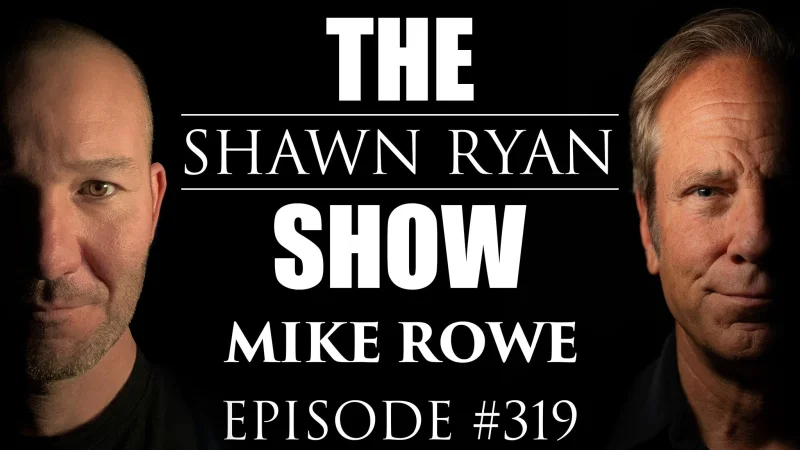
Mike Rowe is putting a blunt diagnosis on American life: there is a lack of hunger in America. The television host best known for Dirty Jobs says too many people have lost the desire to work at jobs they consider to be beneath them, and he is tying that loss of drive to a country that feels less willing to push forward.
That message is landing now because the complaints around it are familiar. Wages in many places have stayed flat while the cost of living has climbed, the divide between the haves and have nots keeps widening, and the middle class is said to be shrinking. Politics in Washington is not making people cheerful, and the implications of Artificial Intelligence are adding another layer of worry for people already questioning whether effort still pays off.
Rowe is not speaking from a distance. Dirty Jobs built its audience by sending him around the country to work alongside people doing the kinds of jobs most people would rather avoid. That experience gave him a front-row view of the labor people often overlook, and it helps explain why he keeps returning to the idea that work itself has become harder to sell as a path to dignity.

He goes further than frustration over paychecks. Rowe attributes part of the problem to laziness and to a nationwide low morale, arguing that people tend to stay stuck when they have little faith things will improve. In his telling, apathy beats optimism once that faith fades. The result is not simply dissatisfaction with a job, but a retreat from the effort to work, achieve, and build for the future.
That is where his argument starts to pull against itself. The complaint sounds moral at first, as if the problem were only attitude. But the conditions he names are material ones too: stagnant wages, rising costs, political exhaustion, and AI anxiety. Those pressures do not cancel his point; they complicate it. A person who believes the climb is rigged is less likely to keep climbing, even if the climb is still there.
Rowe also places the present in a longer American story. He says the American Myth and reality have always had a wide chasm, and he argues there were never any truly good old days because most of history was hard work and luck in just surviving. That is a sharper view than nostalgia usually allows, and it leaves his claim with a harder edge: America’s problem may not be that it lost some golden age of effort, but that too many people no longer believe effort will be rewarded.
Gertrude Stein once called a generation lost, and Rowe’s warning points in a similar direction without using the same words. If Americans keep feeling that work no longer leads anywhere, the issue is not only morale. It is whether the country can persuade people that ambition still has a place in it.
