


Federal officials have refused to name the Immigration and Customs Enforcement officer who fatally shot Lorenzo Salgado Araujo during a traffic stop in Houston, a case that has sharpened scrutiny of ICE and the Trump administration’s immigration crackdown. Authorities said the 52-year-old homebuilder was not the man the agency was trying to find.
The shooting happened early Tuesday as Salgado Araujo drove his crew to a construction site. He was killed at the scene, and the other three men in the van were detained by ICE, including his brother. The refusal to identify the officer or release scene evidence has left the basics of the Houston ice shooting unresolved even as officials say the wrong man died.

That gap matters because the account of how the stop turned deadly is already contested. Three men inside the van told attorney Hugo Balderas-Ibarra that Salgado Araujo did not ram an ICE vehicle, and Balderas-Ibarra said on Instagram that their account was “completely false” and that, at no point, did they use the van to ram into ICE agents or put their lives in danger. Federal officials have not released body-camera footage; the officers were not wearing body cameras, and neither ICE nor the Department of Homeland Security has put out photos, videos or other evidence from the scene.
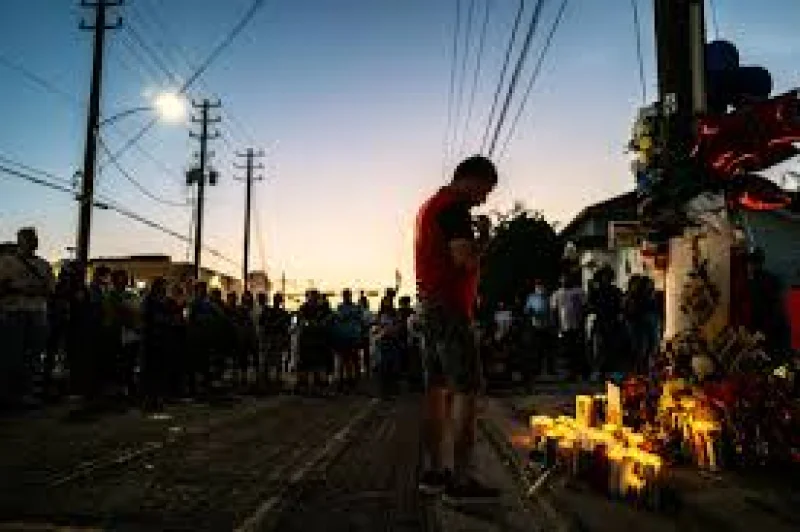
Family members said Salgado Araujo had lived in the U.S. for more than 35 years, had no criminal record and was close to finishing the long process of obtaining legal status when he was killed. Democratic U.S. Rep. Sylvia Garcia said he was not who ICE was looking for. On Wednesday, July 8, 2026, a vigil was held in Houston, where the killing became more than a law-enforcement dispute and turned into a test of how much ICE will disclose when its own account is under strain.
ICE has not released the names of the other three men detained from the van, and officials have also not said when, or whether, they will identify the officer or explain what evidence they are withholding. ICE is pressuring the men to self-deport, keeping the case in motion while the central question remains unchanged: what exactly happened in those seconds before Salgado Araujo was shot?
