


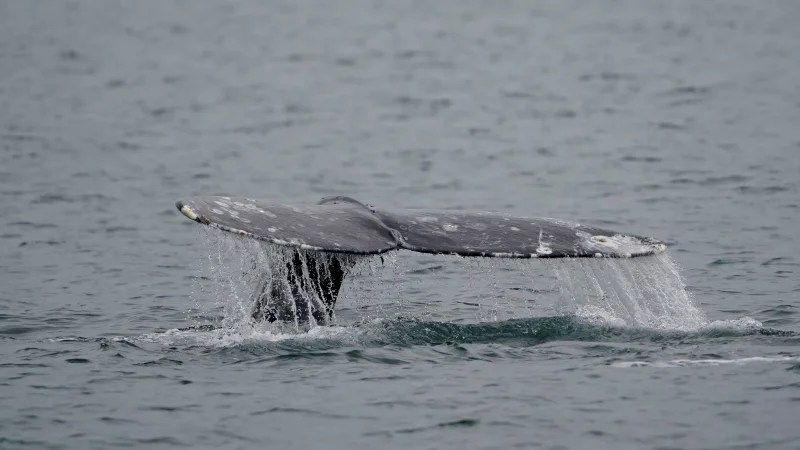
Experts are warning that 2026 could become one of the deadliest years on record for whales along the West Coast if the current pace of deaths continues. The Center for Biological Diversity says 60 whales have already died this year, and gray whales account for most of the recent losses.
The warning matters now because the death toll is building fast across more than one stretch of the coast. Many of the deaths have been reported in Washington state and the San Francisco Bay area, while Southern California has also seen whale fatalities. In February, a 30-foot dead humpback whale washed ashore near 11th Street in Newport Beach, a grim reminder that the losses are not confined to one place.
The numbers help explain why experts are sounding the alarm. Last year, 24 whale deaths were attributed to ship strikes, and 33 whales were found entangled in fishing gear. Those are the same threats that are again showing up in this year’s cases, alongside reports that some of the dead whales were in poor nutritional condition. The Center for Biological Diversity’s Miyoko Sakashita said there is “much less prey” for the animals, forcing them into a long migration and then back toward Alaska while they search for food in waters crowded with ships and fishing gear. She described it as “almost a deadly maze” they have to get through.

The concern is tied to changes far from the West Coast itself. Warming temperatures in the Arctic are affecting the ecosystem where many whales feed, and reduced prey availability is pushing them through areas with more human activity. That makes the route more dangerous at the same time the whales are arriving hungry and weakened.
The friction in the story is that the deaths are being treated as a growing pattern, not isolated accidents. Gray whales are most affected, and experts say the same movement toward food is sending them into a mix of ship traffic and fishing gear that can kill them before they reach safer water.
The Center for Biological Diversity is urging the U.S. Coast Guard to impose a mandatory 10-knot speed limit in areas with high whale activity, and it also backs wider use of pop-up gear. If the trend does not ease, 2026 would trail only 2019, when 122 whales were reported dead, and the next few months will determine whether this year lands near the top of that grim list.
