


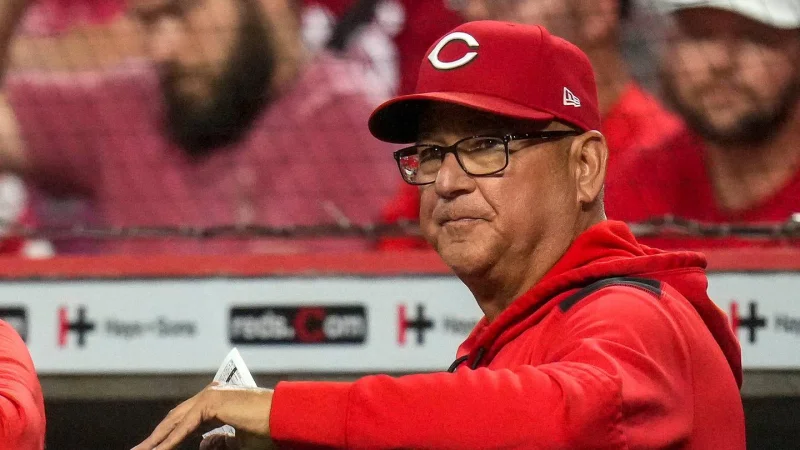
Terry Francona finally put Elly De La Cruz at the top of the lineup after 81 games in 2026, a move that gave the Reds their best player the spot that can deliver the most at-bats. The change came after months of using TJ Friedl, Blake Dunn, Matt McLain and others there first.
The timing is why the move is drawing attention now. Francona entered this season with a record of 1,950-1,672, three American League Pennants and two World Series Championships on his résumé, and he had already gotten the Reds back into the postseason last year. That is why his choice to wait so long before giving De La Cruz the leadoff job landed with more weight than an ordinary lineup tweak.
De La Cruz is the best player on the roster, the fastest player on the team and, by many measures, the player with the most upside the organization has had since Joey Votto. Putting him first is less about rearranging a card and more about using his speed and skill where they can matter every night. It is also the simplest way to explain why the spot matters: the leadoff hitter sees more pitches, more plate appearances and more chances to set the tone.

The numbers sharpen the comparison. De La Cruz stole 67 bases in 2024 with David Bell as skipper, then 47 bases in a season and a half with Francona. Those figures do not tell the whole story by themselves, but they frame the discussion around how the Reds have used their most dynamic player and how often they may have left production on the table.
That is where the friction sits. Francona has long been praised as one of the game’s greatest managers, yet the move to bat De La Cruz leadoff did not come until the season was deep into its 81st game. The Reds have struggled to score runs consistently, which makes any choice that delays getting their best player more chances look harder to defend. Neutralizing a player with De La Cruz’s best attribute is the sort of decision that invites second-guessing the moment it is made.
Whether Francona keeps De La Cruz in that spot is the next question, and it matters because the Reds have already spent too much of the season searching for offense. If the lineup change is the start of a longer adjustment, it could define the rest of the year. If it is only a brief fix, the bigger issue will remain the same: why it took 81 games to get there.
