


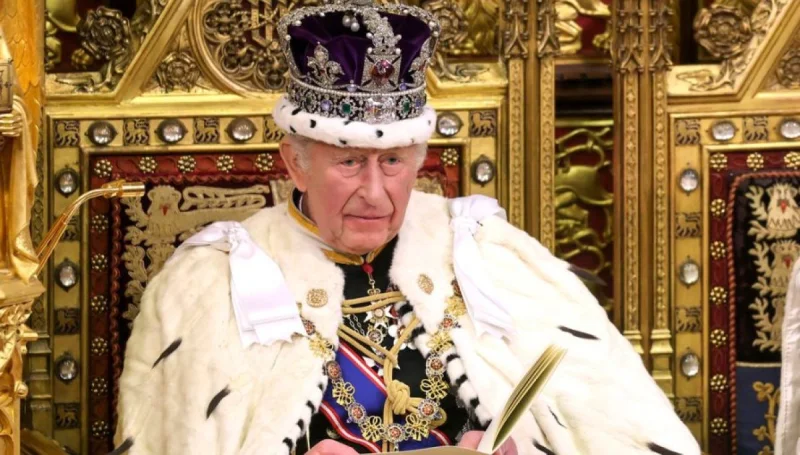
Buckingham Palace has said in the latest Sovereign Grant Report that King Charles III is supreme governor of the Church of England and “protects the space for faith within the multi-faith nation.” The wording matters because it puts Britain’s monarch, and the religious role attached to the crown, at the center of a live argument over what the country is now and what it still says it is.
That debate is not abstract. A recent poll from Theos found that 17% of British adults believe a person must be Christian to be truly British, a reminder that questions of identity and belief still reach into everyday life. Charles, as supreme governor of the Church of England, sits in a constitutional role that is ceremonial in practice but symbolic in force, because it links the crown to a church that has long stood inside Britain’s public life.
The report’s language also points to a broader shift in tone. Buckingham Palace did not describe the monarch only as guardian of a single religious settlement. It said Charles protects the space for faith in a multi-faith nation, a phrase that acknowledges Britain as a place where many beliefs, and people of none, now share the same civic space. That framing sits beside the older argument that the monarch’s historic role is to defend the Christian settlement that shaped Britain’s laws, liberties, institutions and moral imagination.

That older inheritance is large. Britain’s universities emerged within a Christian intellectual tradition. Its common law developed alongside biblical ideas of justice and accountability. William Wilberforce and the Clapham Sect helped lead the movement to abolish the slave trade because they believed every human being bore the image of God. Hospitals, charities, schools and countless civic institutions grew from the conviction that every life possesses inherent worth. Christianity, the report argues, helped transform Western societies’ understanding of equality, human dignity, human rights and the rule of law.
Yet the palace’s new phrasing leaves an unresolved question at the center of the story: how far can a monarch who is supreme governor of the Church of England broaden the language of faith without weakening the Christian foundation that made the office what it is? The answer will matter not just for the Church of England, but for Britain’s wider argument about national identity and the future of the United Kingdom. Readers looking for a sign of where Charles stands will find one in the language itself, and another in how that language is carried into the next Sovereign Grant Report and the public duties that follow.
For more on Charles III’s public role, see his visit to Grimsby Town FC in a recent profile at and another account of King Charles III cheering on The Tempest in a surprise RSC visit at A separate report on Radio Caroline’s apology after a false death message is available at
