


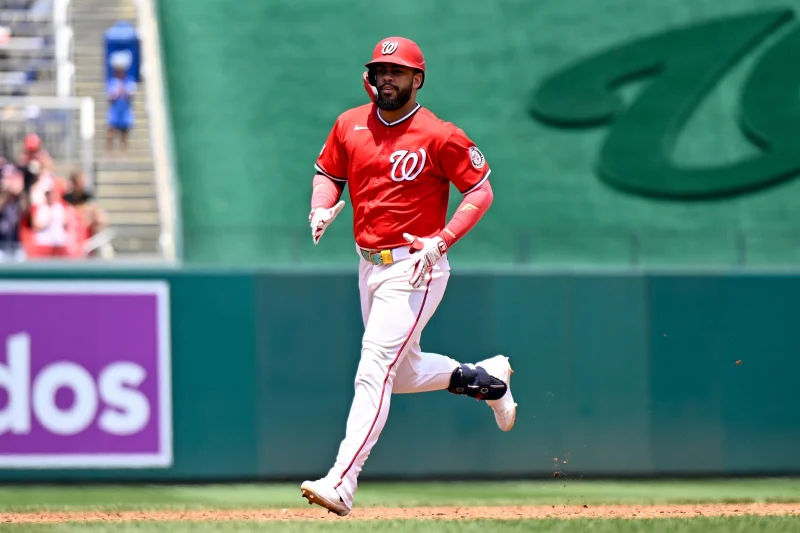
The Washington Nationals went back to work on the mound with little room for error when they opened a weekday series against the Houston Astros after allowing 23 runs in three games against the Pittsburgh Pirates. The lineup across from them had enough form to matter and enough flaws to keep the door open.
That is why Astros Vs. Nationals was getting attention now. Washington needed a cleaner start from its staff, while Houston arrived 2 games under.500 and third in the American League West, still close enough to a playoff race to make every series count. The Astros had also been playing better baseball after several rough stretches earlier in the season, which made this trip feel less like a routine stop and more like a test of whether the turnaround would hold.
Spencer Arrighetti was the most revealing name in the matchup. He entered with a 7-4 record and a 3.81 ERA, but June had been a mess, with 25 runs allowed in 25.0 innings across five appearances. He steadied at the start of July by giving up one run and two hits over 6.0 innings against Tampa Bay, a reminder that his results could swing sharply from one stretch to the next. For Washington, that mattered because a starter who settles in early can quiet the kind of game that turns a fragile series into another long night.
The rest of Houston’s options only sharpened the contrast. Mikolas had two of his last three starts with five or more runs allowed, Burrows had only two June outings in which he gave up fewer than four runs, and one of those came in a one-inning relief appearance. Alvarez had yet to work into the sixth inning, even if he rarely gave up substantial runs, while Imai brought the weight of a large offseason contract that raised expectations the moment he arrived. Griffin, meanwhile, had pushed his ERA to a sub-2.90 mark and was hovering close to a 1.00 WHIP, the sort of profile that can shorten a series fast if the numbers keep holding.
That mix is what made the series different from a typical midweek reset. The Nationals were trying to prove the 23-run leak against Pittsburgh was an exception, not a warning, and the simplest way to do that was with innings that stayed intact and runs that did not pile up early. If that did not happen, the next games in the set would not just be about one bad stretch; they would become a test of whether Washington had enough pitching left to survive a crowded July schedule without losing ground again.
