


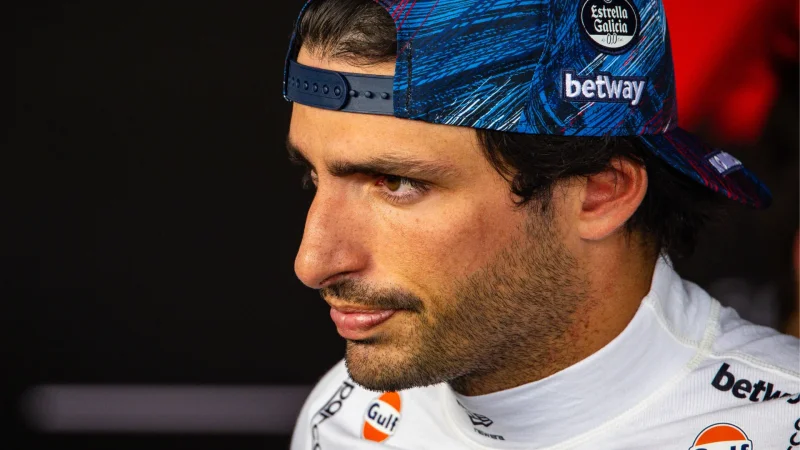
Carlos Sainz was given a rare one-lap penalty after the British Grand Prix, and the sanction dropped him from 12th on the road to 17th in the classification. It did not change the points, but it did rewrite the order after a race already shaped by a safety car interruption.
The penalty is being searched now because the sequence that triggered it was unusually technical. Max Verstappen's rear wing issue at Copse pitched the Red Bull into the gravel and brought out the safety car, then Charles Leclerc pitted at the end of lap 48 and rejoined in front of the lapped Sainz. Sainz did not pit before Leclerc, but he came in the next time by, beat Leclerc to the start-finish line as he dived into the pits and briefly unlapped himself. In ordinary race logic that sounds like a gain; under the rules, it was the opposite.

F1 regulations do give lapped cars a chance to unlap themselves under a safety car, but Article B5.13.4 c) turns on a very specific timing test. It says the cars eligible to unlap themselves are those that were lapped when they crossed the start-finish line at the end of the same lap in which they crossed the first safety car line for the second time after the safety car was deployed. At Silverstone, that first safety car line sits on pitlane entry. Sainz crossed it at the crucial moment while diving into the pits, so for the rule he was treated as a non-lapped driver at the start-finish line. That is why his name was not among the seven listed as eligible to unlap themselves, with only Oscar Piastri ahead of him among that group at the time.
The stewards said that after completing its pit stop, Car 55 was once again a lapped car when it rejoined the track, but by then the damage in classification had already been done. The team representative accepted that the team made two errors and that it had inadvertently gained a lap when it was not entitled to do so. The gained lap was then removed from Sainz in the standings through the one-lap penalty. He remained ahead of Fernando Alonso and Lance Stroll, but the final sheet now shows a five-place drop that came from a rulebook quirk rather than on-track pace.
What makes this matter beyond the lost positions is that a restart with a late dash to the flag would have made the sequence far more consequential. If the race had resumed, the cars eligible to unlap themselves would have been the ones granted that status by race control, while Sainz would have had to accept the classification he had at that moment. Instead, the race ended under the safety car, and the interpretation of one line on pit entry decided the outcome. It is the kind of result that only shows up when the exact moment a car crosses the line matters more than the lap time itself.
