


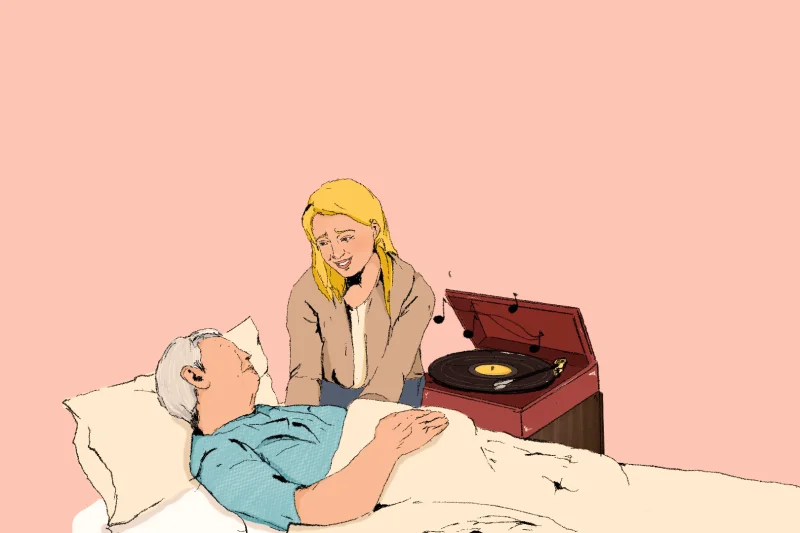
Caty Hollis says her father’s death at home in London two decades ago changed the way she understands end-of-life care. Watching him die in familiar surroundings, with her family close by and the room filled with music, left her with a different memory of dying than the one she had from hospital work.
That memory still matters because Hollis was already a nurse at the Bradford Royal Infirmary when she went to London to help care for him in his final weeks. She was 61 when she reflected on the experience, and in 2003 she later decided to join Marie Curie, one of the UK’s largest end-of-life care charities, after seeing how much comfort could matter when treatment could no longer change the outcome.
Her father had been living with a long battle with colon cancer, and about a week before he died the family agreed he would remain at home. He was a devoted police detective, but in his final days he said he wished he had been more present in his three daughters’ lives and had not let work take so much of his time. For Hollis, that honesty sat beside another wish: he wanted her and her husband to know the joy of parenthood. He told her he was dying so that they could have their baby, and she said that brought him great peace.

The room around him reflected that peace. His bedside was filled with his favourite music, including Frank Sinatra and Electric Light Orchestra. On the morning before he died, Hollis and her family talked about her sister’s baby and laughed about possible outlandish names, while she believed he could still hear them. When he died, James Taylor’s “You’ve Got a Friend” was playing. Hollis later described the moment as “like a circle of life,” a phrase that fits the way grief and new life were folded together in that house.
That is where her view of care sharpened. She said watching her father die felt different from the deaths she had seen on her ward, where the priority was often urgent medical intervention to prolong life. At home, the goal became keeping his final moments as peaceful as possible. Marie Curie’s work is built around that same idea: hospice care that shifts away from curative treatment and toward comfort and quality of life, with family presence treated as part of the care rather than an interruption to it.
The unanswered part is not whether home was better for Hollis’s father. It was. The harder question is how many more families could have that same choice, because the peace she describes depended on a decision made a week before he died and on support that is still not available to everyone who wants to stay at home.
