


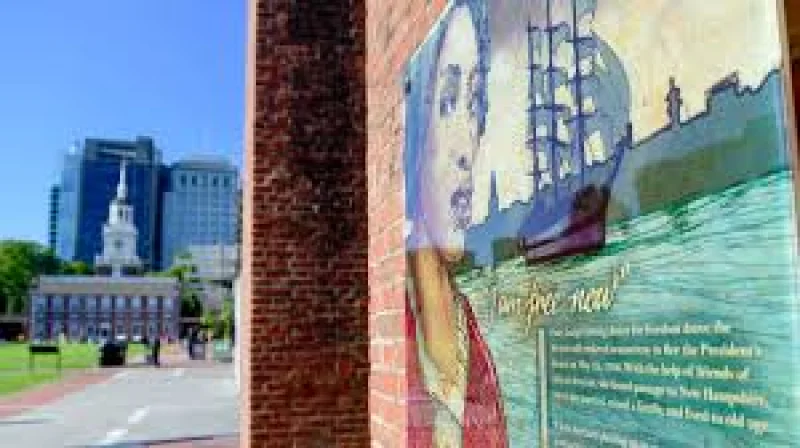
The Trump administration told park employees last May to review all content in the parks within three months, a sweeping order that critics say helped drive the removal or alteration of scores of signs on public lands. Now the fight has landed on the history visitors see every day.
That is why Jerry Bransford is part of the story. Bransford worked at Mammoth Cave national park for more than two decades, and he said the cave’s history was never just about rock and darkness. “At the hotel, restaurant and slave quarters, they were in slavery, but once they went down inside that cave, they were free,” he said.

The dispute matters because the National Park Service system covers 433 parks, historic sites and monuments, and national parks are supposed to present US history, not only scenery. In Mammoth Cave, the issue is especially sharp: the cave is the largest known cave system on the planet, and its history includes Materson “Mat” Bransford, one of the earliest explorers of Mammoth Cave in south-central Kentucky. Enslavers rented him out for $100 a year to a man who wanted to turn the site into a tourist attraction, and in the mid-19th century he led notable guests like Emperor Dom Pedro of Brazil and Ralph Waldo Emerson through the cave.
That is the history the park commemorated with a sign showing five generations of Bransford cave guides. It also is the kind of material critics say has been vulnerable as the administration pushed to rewrite and whitewash history. Anne Mitchell Whisnant called the effort “both stupid and uninformed and very pernicious,” and said, “The Trump administration has a very particular idea of whose stories are important and whose stories made the America that they hope to restore.”
The unresolved problem is not whether the sign mattered; it did. The Department of the Interior did not answer questions about how flagged materials were reviewed or how many signs had been removed or altered across the national park system, so the public still does not know which displays are gone, which remain, or whether the Bransford sign is safe. That uncertainty is what gives the campaign its force: a review ordered in three months can still reshape what visitors learn for years.
