


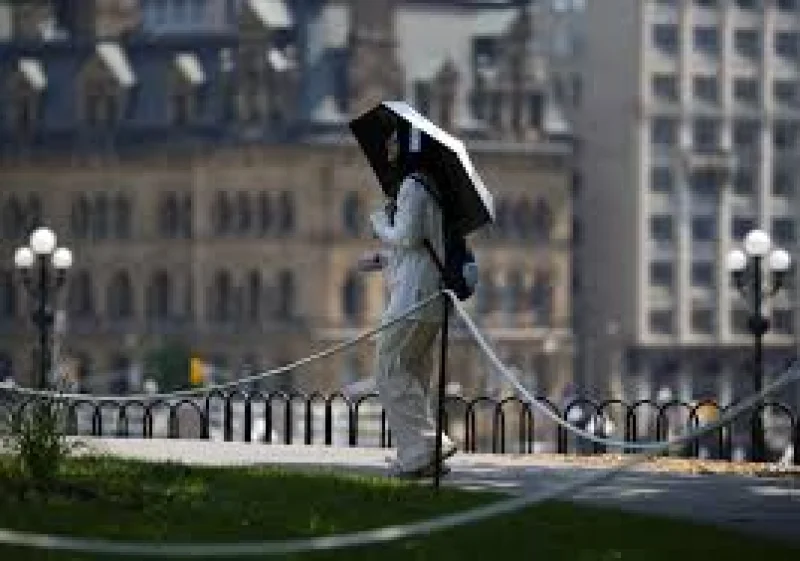
Global News has published a piece on what Canada’s colour-coded heat warnings mean just as temperatures climb, and the timing has put Toronto Temperature back at the center of the conversation. The article, built largely from reader comments, turns a routine forecast into a wider question about how people read heat now, and how much warning they think they need.
That is why people are searching for it today. Environment Canada is the name attached to the forecast system, and the colours are the point: the weather forecast is presented in colours, meant to signal risk in a way readers can take in quickly when the heat is rising. For readers in Toronto and Canada, the immediate issue is not abstract policy. It is whether the warning on the page matches what they feel outside their door.

The comments around the story push that question in two directions at once. On one hand, they treat the heat as familiar and serious. On the other, they argue that Toronto has lived through hotter temperatures in the 1930’s and 1940’s, when there was no air conditioning and summers were endured differently. The source text adds that the top 17 temperatures recorded in Toronto were before 2000, and that weather identical to what people are experiencing now has been relied on for over 100 years. That undercuts any easy claim that the current spell is without precedent.
The old and the new sit side by side in a way that gives the discussion its edge. Summer is hot, beautiful and short-lived, one comment says, and winter will be here soon. That line does more than sound nostalgic. It captures why heat warnings land so sharply in Toronto: the season is brief, the discomfort is immediate, and the argument over how much attention the colours deserve never stays theoretical for long.
What comes next is not another dramatic turn so much as a clearer test of the warning system itself. If people are going to keep leaning on colour-coded forecasts during hot weather, they will need those colours to mean something plain enough to act on. The unresolved gap is still the same one that brought readers in: what each warning level actually signals when Toronto Temperature becomes the day’s main concern.
