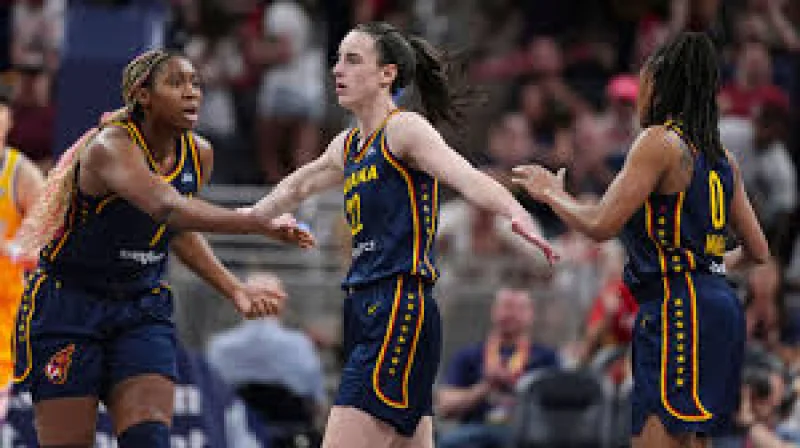
The WNBA All-Star voting results still force voters to sort players by position, and that choice left Rhyne Howard off one 2026 ballot even though she was producing like an All-Star. Howard, who was averaging 18.6 points, 3.8 rebounds, 3.2 assists and 2.5 steals, was classified as a guard under a system that still asks voters to pick four guards and six forwards/centers.
That mattered because voting closed on Saturday, locking in a process that will determine the starters and shape the final All-Star field. Starters are set by player votes at 25 percent, media votes at 25 percent and fan votes at 50 percent, then ranked by position after the totals are counted. The top four guards and top six forwards/centers make the starting group.

The mismatch is the point. The WNBA moved to a positionless format for first- and second-team All-Pro selections in 2022, but All-Star voting still makes people sort the league into old frontcourt and backcourt buckets. That can turn a strong season into a bookkeeping problem. Howard was not the only player to feel the squeeze of that subjectivity, but her case is the clearest: a scorer and defender leading the fourth-place Dream in points, assists and steals was left off one ballot because the guard spots ran out.
One voter’s choices show how narrow the margin can be. Sabreena and Annie had only three differing votes on their All-Star ballots, and Annie said Howard got the last guard nod, while Bueckers replaced her. Annie also said it hurt to leave out Bueckers and Sonia Citron, calling them no-brainer All-Stars, and described Jonquel Jones as an easy frontcourt inclusion because of her scoring efficiency, rebounding and rim protection. That same ballot logic extended to the frontcourt, where Natasha Mack and Alyssa Thomas were weighed differently because of team context and individual impact.
The next step belongs to the coaches. The WNBA’s 15 coaches will choose the 12 reserves, with three guards, five frontcourt players and four players regardless of position, and they cannot vote for their own players. That means Howard’s path is still alive, but the ballot itself has already made the broader point: in a league that has embraced positionless recognition in one place, All-Star voting still asks voters to make old positional cuts that can leave a player with Howard’s numbers on the outside.