


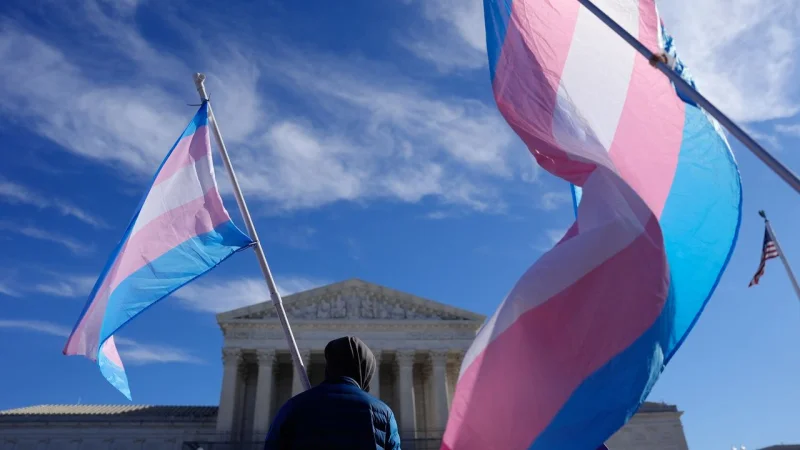
The Supreme Court on Tuesday said states may keep transgender girls off girls’ and women’s sports teams under Title IX, handing West Virginia and Idaho a win in a lawsuit that could shape school athletics nationwide. The justices unanimously agreed that schools can define sex as biological sex when separating teams by sex, but split 6-3 on whether those bans also violate the Fourteenth Amendment.
The ruling lands in a case involving Becky Pepper-Jackson, a transgender teenager known in the case as B.P.J., and Lindsay Hecox, an Idaho college student. It also arrives after January arguments, when the Court heard whether states may exclude transgender female athletes from girls’ sports teams. For schools, the practical result is immediate: the law now gives them a clear path to separate teams by sex identified at birth in a case that had been waiting for a final answer.
Pepper-Jackson’s own record shows why the case never fit the easy version of a sports fairness debate. She competed on her school’s track-and-field and cross-country teams, where nobody was cut, and she came in near the back. She had not gone through male puberty and did not have male testosterone levels because she had taken puberty blockers and was on female hormones. Hecox, by contrast, had gone through male puberty, but she was not fast enough to make her university’s N.C.A.A. cross-country and track teams, so she played club sports instead.

That divide is where the case found its friction. The plaintiffs argued that some transgender girls who have taken puberty blockers and hormones do not have the athletic advantages that biological males generally have, and that it is unconstitutional to exclude those athletes from girls’ teams. Justice Brett Kavanaugh, writing for the six conservative justices, said biological males generally possess inherent physical advantages in sports and concluded that excluding transgender girls from girls’ teams is substantially related to the important interest of promoting equal athletic opportunities for females by protecting the safety and competitive fairness of girls’ and women’s sports.
Twenty-seven states have laws that separate sports teams based on sex identified at birth or biological sex, and the Court’s 9-0 Title IX ruling gives those laws new force. But the 6-3 split on the equal-protection clause leaves the constitutional question unsettled, which matters because the Court agreed on what the statute means without agreeing on how far the Constitution reaches. The N.C.A.A. and the International Olympic Committee already use similar rules, and the plaintiffs had tried to show that being transgender does not automatically mean a girl holds a competitive edge.
For now, the decision closes the door on the Title IX challenge and opens a harder fight over the Fourteenth Amendment. The unanswered question is whether the same rule can survive when applied to transgender girls like Pepper-Jackson who have taken puberty blockers and hormones and do not fit the broad assumption the states used to justify the bans.
