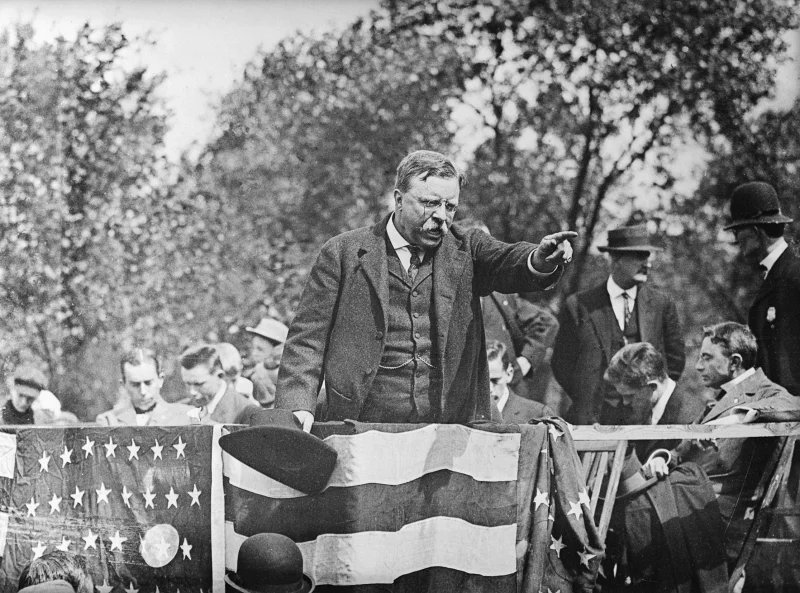
The Theodore Roosevelt Presidential Library will open July 4 in North Dakota's Badlands with something no museum of its kind has tried at this scale: an interactive AI-powered Theodore Roosevelt who can answer questions in his voice. The experience, called Talk with TR, is part of a 96,000-square-foot library and museum that cost $450 million and is meant to greet visitors when the doors open on the day America turns 250.
That timing is no accident. The opening lands on a date built for national reflection, and the library is betting that a historical figure who once dominated public life can still pull people in if he can be encountered, not just observed. Roosevelt served as president from 1901 to 1909, but the new institution is being sold as more than a memorial; it is a hybrid of physical and digital experiences designed to make his life, leadership and legacy feel immediate.

The scale of the archive behind it helps explain why the project is being treated as a serious museum venture rather than a gimmick. The searchable repository includes hundreds of thousands of documents organized with Microsoft AI technology, and the avatar itself was trained on 400,000 archival documents. Visitors will be able to ask questions and get responses in the same fast-talking, energetic voice associated with Theodore Roosevelt, while the character appears in wire-rim spectacles, a cream waistcoat with a gold watch chain and a mustache. Conversations are rated PG, a sign that the institution is trying to keep the exchange broad enough for family audiences while still feeling conversational.
But the feature also carries an obvious contradiction. Michael Cullinane, who has been involved in the project, said, “It is not perfect, it is not Theodore Roosevelt, but it gets many things right.” That is the central gamble: the library wants the avatar to sound and move like Roosevelt without pretending it can replace him. Laura Hoffman argued that the point is not perfect imitation but access, saying people can connect with the written words of a historical figure and also pick up personality through vocal intonation, body language and mannerisms.
The question now is less whether the library can open on schedule than whether the avatar can hold the line between interpretation and impersonation once visitors start pressing it with their own questions. The institution is entering public view with a bold answer already built into the exhibit: no, the machine is not Theodore Roosevelt. It is a structured encounter with him, and on July 4 that distinction will be tested in real time.