


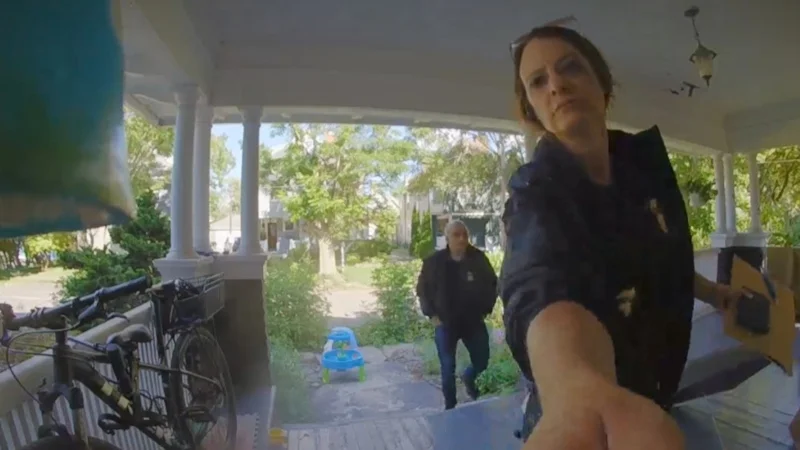
Federal officers went to David Streever’s home in Rochester last week and later tried to confront him at a New York City hotel after a January email he sent to Todd Lyons was deemed a threat. On Tuesday, Streever said the warning notice delivered to his wife made clear that his criticism of ICE had been treated as something more dangerous than protest.
Streever said he was on a trip to Finland when two officers arrived at his house and handed his wife the notice. The email, sent in January to Lyons, then the acting director of ICE, came after an immigration enforcement-related incident in Minneapolis in which an ICE agent shot and killed Renee Nicole Good. In that message, Streever called Lyons “a monstrous human being” who would “never know peace.”

The notice has turned a political argument into a federal one. Adam Steinbaugh of the Foundation for Individual Rights and Expression said the email was protected speech under the First Amendment and did not amount to a legitimate threat. He said a true threat requires a serious expression of an intent to commit violence, and this message did not come close. ICE, meanwhile, said it investigates all credible threats toward its employees and officers, including threats to the ICE Director.
Streever said he had been shaken by the shootings in Minnesota and wanted to speak out, not threaten anyone. “Like many Americans, I was deeply upset after the shootings in Minnesota and I felt compelled to do something,” he said. “Writing a letter to the head of ICE seemed like the least I could do to express my sense of outrage. I never dreamed it would lead to a knock on my door by federal officers.”
The sharpest unanswered question is what, exactly, in the warning notice convinced officers to treat the email as a threat months after it was sent. The government has not said whether any further action will follow, but the case now sits at the point where criticism of a federal agency, a grieving response to violence and a threat assessment all collide.
