


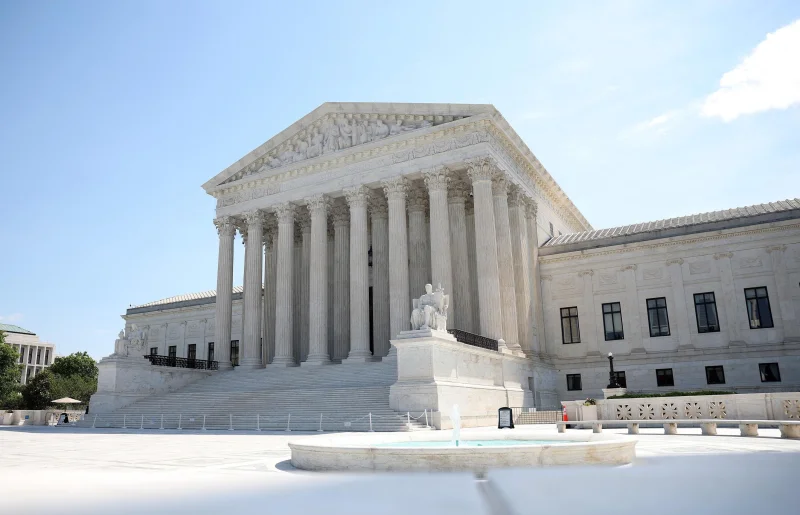
The Supreme Court on Tuesday struck down limits on how much political parties can spend directly in coordination with candidates, clearing the way for party money to pay for campaign expenses such as advertisements and rallies. The 6-3 ruling gives parties far more room to support nominees in a way that had previously been tightly capped.
The decision lands at a moment when Republicans are already holding a cash advantage. At the end of May, the Republican National Committee had $125.5 million in cash on hand, while the Democratic National Committee had $14.9 million and $18.3 million in debt. That financial gap helps explain why Donald Trump immediately called the ruling a “BIG WIN FOR REPUBLICANS.”

Before Tuesday, parties were limited to spending between $65,300 and $130,600 on an individual House candidate, between $130,600 and $4,071,800 on an individual Senate candidate, and up to $32,392,200 on a presidential candidate. The challenge came from the National Republican Senatorial Committee and J.D. Vance, and the Supreme Court agreed with them. The practical effect is that party committees can now bankroll candidate-specific spending much more aggressively, even though donors still cannot earmark money to say it must be spent on one candidate.
That is why the ruling is being read as a Republican advantage, but not a clean one. Liberal justices warned it could embolden wealthy donors and open the door to corruption and more quid pro quo donations, even as supporters framed it as a straight victory for party power. Mike Ambrosini said the litigation was “one of the main reasons that anyone that is a Republican should not write our obituary in June,” a line that captures how much faith Republicans are putting in the ruling before the summer money chase accelerates.
What happens next is less about another court date than about how quickly parties and donors adapt. Republicans enter the November midterms with a larger war chest and a new legal path to spend it alongside their candidates, while Democrats will have to decide whether to lean harder on their small-dollar strengths or find a faster way to close the gap.
