


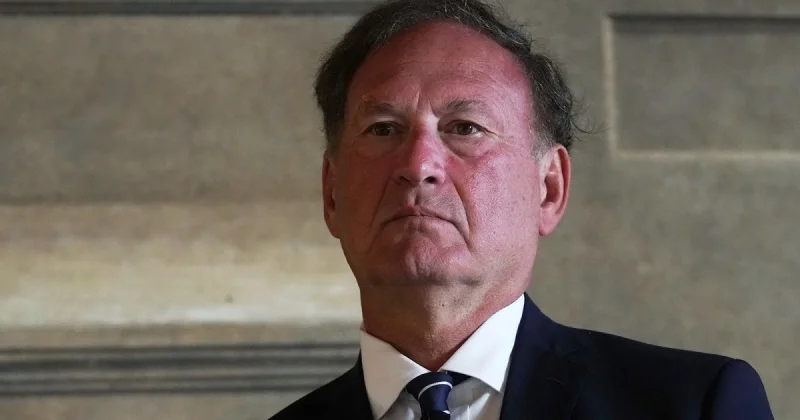
Justice Samuel Alito announced the Supreme Court’s decision on Thursday morning in Mullin v. Al Otro Lado, then bristled after Justice Sonia Sotomayor read her dissent aloud from the bench. The sharp exchange followed a ruling that gives federal officials a green light to stop some asylum claims before they can be considered.
The case matters now because it reaches people approaching a port of entry at the U.S.-Mexico border, not just those already inside the country. Under the law, a noncitizen may apply for asylum once that person arrives in the United States, but the government placed Customs and Border Protection officials along the border to block migrants without valid travel documents from physically entering, a policy that reached even those in the process of entering.
That is the point Sotomayor pressed. After Alito announced the decision, she read from her dissent and said the ordinary meaning of arrives in is not always tied to being within a physical space. She gave the example of saying one has arrived in Washington, D.C., after landing at a nearby airport in Virginia, then argued that context mattered and that Congress passed the Refugee Act of 1980 because it did not want the country to repeat the mistakes of its past.

She went further. In her telling, if the refugees on the MS St. Louis were to walk up to a port of entry on the southern border today, the majority’s reading would let immigration officers refuse even to consider their asylum applications by physically keeping them from stepping onto U.S. soil. The historical warning was not decorative; it was her way of saying the court was treating a word as if it were only geography and not also law, purpose and consequence.
According to Joan Biskupic, Alito let his anger flash after Sotomayor finished. He accused her of catching him off guard and said, “There is much that I would have added.” The line was brief, but it marked an unusually public break from bench decorum inside the Supreme Court.
The ruling leaves the government’s border policy in place and the majority’s reading of arrived in controlling the result. Sotomayor’s dissent makes the stakes plain: a legal interpretation framed as tidy text can still decide whether legitimate asylum-seekers ever get a hearing. That is the question the court has now answered for the moment, and it is a hard one for the people standing outside the gate.
