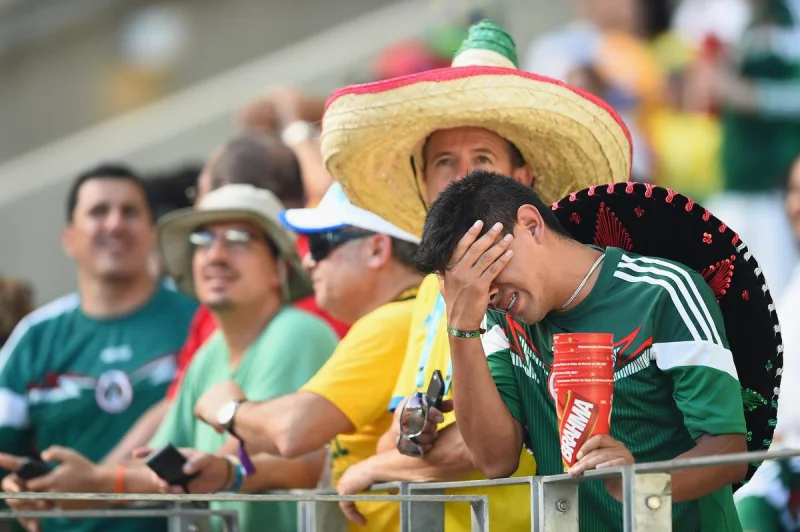
MUNDIAL Magazine and Sad Boyz Clothing have released a limited-edition No Era Penal tee alongside a new MUNDIAL Films documentary that turns one of Mexico’s darkest World Cup memories into a fresh piece of football culture. The shirt and film land together, with the campaign built around the 2014 match against the Netherlands and the phrase that has followed it ever since: No era penal, or it was not a penalty.
The timing gives the release a sharper edge than a simple anniversary tribute. Mexico’s 2026 World Cup campaign is already pulling that old match back into view, and this new project rides that wave with purpose. The tee is black, marked with a skeleton graphic, the phrase No Era Penal and the date 6.29.14, while the back reads En memoria del día más triste, México v Holanda. It is not dressed up as nostalgia. It is a marker of grief, made to be worn.

The documentary, also titled No Era Penal, is a short film directed by Grant Best and built around voices that sit close to the heart of the story: Raúl Jiménez, Miguel Herrera, Rey Mysterio, Alex Esquivel and Alana Meraz. It looks at Mexican football culture through the lens of that round-of-16 defeat, a match that remains one of the country’s deepest national scars. In the film’s account, Mexico were minutes away from victory before Wesley Sneijder’s equalizer and Arjen Robben’s disputed stoppage-time penalty changed everything, with Klaas-Jan Huntelaar also scoring in the game.
That split is the point. The match is described one way on the field and another way in memory. The penalty was given. No era penal insists it was not. The phrase has become bigger than the final whistle, and the documentary leans into that gap rather than smoothing it over. It even includes interviews with fans outside the newly renovated Estadio Azteca, where the old wound is still easy to reopen, especially in a country that has hosted the World Cup in 1970 and 1986 and keeps measuring itself against those moments.
For now, the release does something more interesting than commemorate a famous loss. It packages a disputed call, a national grievance and a shared chant into objects people can wear and watch. That is why it matters today: not because the argument is settled, but because the argument is still alive, and this project makes that plain at the exact moment Mexico is looking ahead to another World Cup cycle.