


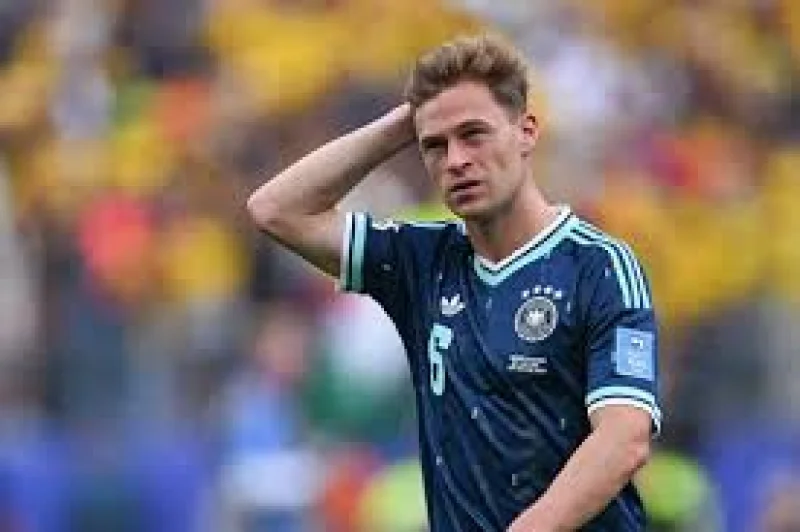
Lothar Matthäus has urged Julian Nagelsmann to move Joshua Kimmich out of Germany's backline and back into central midfield, arguing that the captain is no longer giving the team what it needs at right-back. He said bluntly: "Do him a favour and get him out of the backline."
The timing matters because Germany has already won Group E and is heading toward tougher knockout-stage opponents, so every decision about structure now carries more weight. Kimmich has been dependable at right-back for Germany, but the trade-off is hard to ignore: by putting him there, Germany has given up one of its best midfield orchestrators at exactly the moment creativity and control become harder to find.
Matthäus made the case with unusual directness, telling Bild that he does not see the player he has known for years. "I don’t see the Joshua on the pitch that I’ve known for years," he said, adding that at Bayern Munich Kimmich is "absolute world-class" and that "from the right-back spot, he just can’t seem to manage it." The point is not only where Kimmich stands on the field, but what Germany loses when he is there instead of in the middle.
That loss shows up in the way Kimmich normally plays centrally. In midfield, he dictates the tempo, presses aggressively and keeps looking to move the ball forward. Germany has trusted him at right-back because of defensive needs, but the cost has been a thinner midfield and less control over matches. Pavlović has also struggled for Germany even after strong performances for Bayern Munich, which leaves Nagelsmann with a selection problem that is not easy to solve by form alone.
Matthäus went a step further and questioned whether Kimmich is leading from the back in the same way. "In terms of his body language and positioning, I don’t see him as someone who leads the team or exerts influence when things aren’t going well," he said. That is the friction in this debate: Kimmich can be useful at right-back, but Germany may be paying for that reliability by placing its most influential midfielder in a role that does not fully fit him.
What comes next is simple to ask and harder to answer. If Nagelsmann keeps Kimmich at right-back, he is signaling that defensive balance still comes first. If he moves him back into midfield, he is accepting that Germany may need more control, more tempo and more invention to survive the knockout rounds.
