


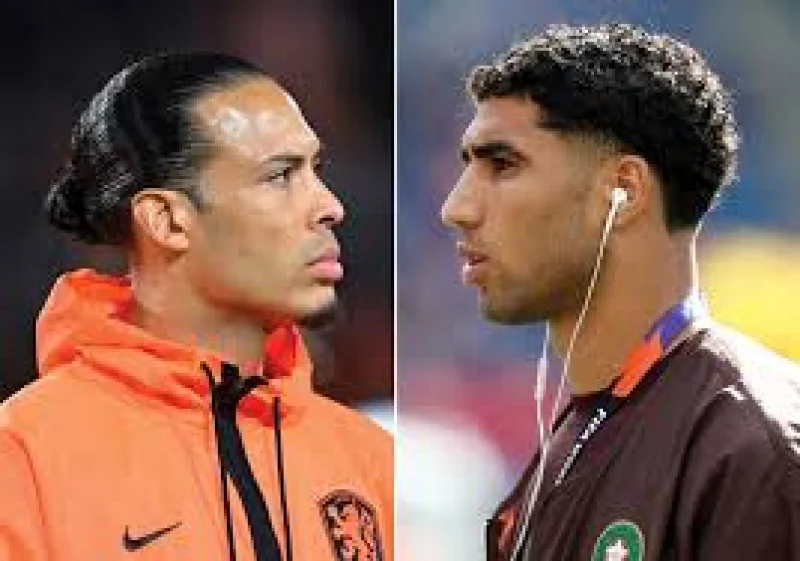
The Netherlands and Morocco met at World Cup 2026 in Monterrey after both sides marched out of the group stage unbeaten, a matchup that says as much about modern football’s identity as it does about the scoreline to come. The Dutch arrived after topping Group F with seven points and 10 goals. Morocco reached the same stage undefeated, with seven points of its own and a finish behind Brazil only on goal difference.
That is why the search for Morocco Vs Netherlands matters today: this was not a routine international, but a meeting between two teams that had not lost in the tournament and had already made a case for being among its sharpest sides. Manchester United defender Noussair Mazraoui is one of 19 Morocco squad members born outside the country, a number that reflects how much the squad has been shaped by players who grew up elsewhere but chose Morocco on the international stage.
Dries Boussatta gives that shift a human shape. Born in Amsterdam’s De Baarsjes district, he was the first Dutch-born player of Moroccan heritage to represent the Netherlands, and Frank Rijkaard handed him his debut against Germany in November 1998. He later made two appearances for Morocco after earning three caps for the Netherlands, something that would still have been allowed under Fifa’s rules at the time because his Oranje matches came only in friendly games.

That detail matters because it shows how the route between the two sides was once more open than it is now. For decades, the Netherlands was treated as the natural destination for footballers born on Dutch soil to Moroccan families, but that assumption no longer holds. The relationship between the Dutch and Moroccan football federations has changed so much that the old hierarchy has been reversed in practice, with Morocco increasingly able to persuade players to commit before the Netherlands can make them its own.
The broader picture at World Cup 2026 makes that shift even harder to ignore. Almost one in every four players at the tournament was born outside the country they represent, and eight of the 48 squads had at least as many players born abroad as in the country. The game in Monterrey was therefore more than a knockout tie between unbeaten teams. It was a snapshot of where international football now lives, and of how Morocco and the Netherlands arrived there by very different routes.
What remains unresolved is not whether Morocco can compete with the Netherlands in the present, but how long this new balance of talent will last. If the old assumption has vanished, the next question is which federation learns faster from the change.
