


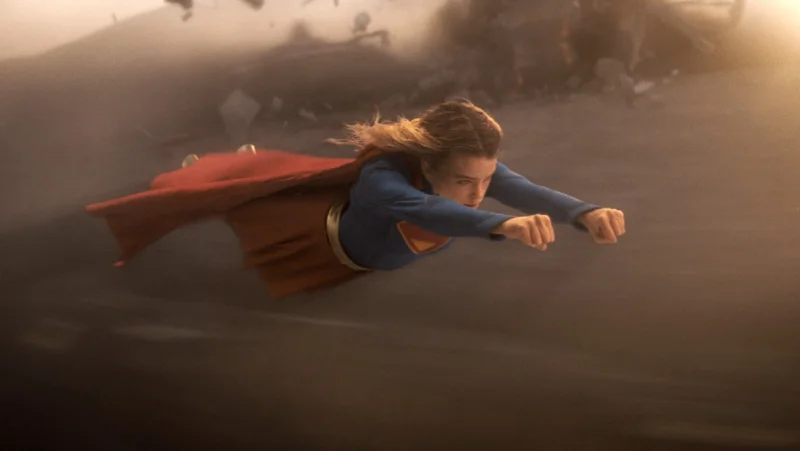
Supergirl opened by doing something superhero movies rarely do now: it refused to try to save the universe. Craig Gillespie’s first DC outing was a small-scale, personal adventure, and that choice has already put the film at the center of a familiar argument about what superhero stories should be.
That debate matters today because the movie’s opening weekend performance and critical appraisal are already driving the kind of notes DC brass is likely to hear for weeks. The easy version will say the film failed because it was too modest. The harder reading is that it may have done exactly what the genre needs, even if that is not always the path that looks safest in the moment.

For David Ehrlich, the case for that bigger reading is hard to miss. He spent a 31-hour marathon with all the previous MCU films before Avengers: Infinity War, and that history hangs over the current superhero conversation. By 2018, Infinity War was headed to theaters with a promise of a showdown between most of the MCU’s biggest names and Thanos, who was hellbent on destroying not just our universe, but half of all universes. One year later, Avengers: Endgame reversed those events, and the universe remained the primary stake of the MCU. Add the Multiverse twist, and the whole machine can feel both smaller and larger at once.
That is the friction point sitting underneath the reaction to Supergirl. Superhero stories from both the Marvel and the DC varieties have helped exhaust audiences with cinematic universes built on world-ending stakes, and the MCU has even pushed most of its smaller-scale stories to television while tying those stories back into the wider universe. In that context, a film that stays personal should not feel like a mistake. It should feel like a correction. Hideo Kojima has explained why being formulaic can be a good thing, and the same logic applies here: formula is only a problem when it has no purpose. A defined structure can give a story shape, but when every story is built to threaten everything, the result is bad for storytelling, boring for audiences, and unsustainable for a major portion of the box office.
Still, Supergirl is already being described by some as formulaic or boring, which is the contradiction at the heart of the response to it. The film is being criticized for the very qualities that may make it useful. That does not mean every small superhero story works. It does mean this one may have found the right scale at the wrong moment for the people who wanted a bigger blast. For DC, the real lesson is not whether the movie looked large enough. It is whether the genre can keep its audience without asking, once again, for the end of everything. James Gunn teases new Lanterns footage as full trailer nears release may be the next sign of how that balancing act is being handled, but the answer Supergirl offers is already plain: sometimes surviving the superhero cycle starts by shrinking the stakes, not inflating them.
