


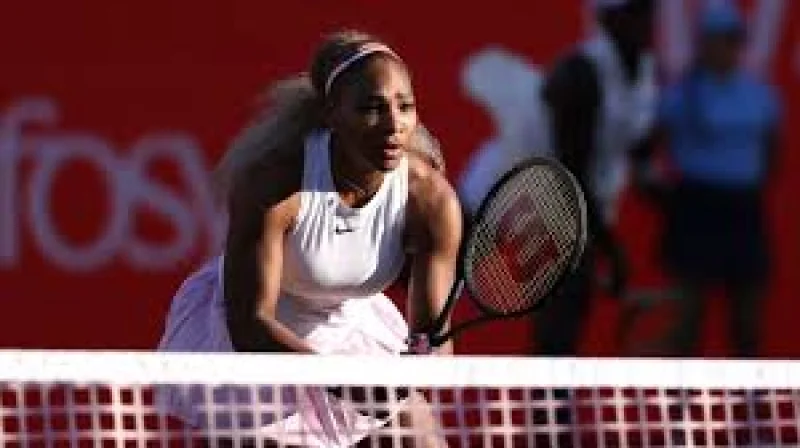
Serena Williams is back in the conversation at Wimbledon for the first time in almost four years, and before she even steps on Centre Court she has made clear what nearly stopped her from coming back. On Sunday, she called tennis anti-doping rules “grueling,” said the system felt “unprofessional,” and said the reporting demands were a major reason she hesitated before taking a singles wild card.
She will play Maya Joint on Tuesday, a return that comes after Williams spent nearly four years away from singles and only accepted the wild card the day before the deadline. The timing matters because this is not just a comeback story; it is a test of how one of tennis’s biggest names fits back into a system she says she did not fully understand when she last left the sport after what she thought was her final match at the U.S. Open.
Williams said the rules caught her off guard. She said she did not know some of them, including that a missed test outside her window can still count as a miss, and she said that trying to manage the requirements while living a public life makes the process feel harsher than it should. “My life is busy, I run a company, I run a VC company. I travel the world,” she said, adding that she has children and has to rebuild the routine of reporting every day.
That complaint lands against the way the anti-doping system actually works. Under World Anti-Doping Agency rules, players must submit to a test when a doping control officer requires it, even outside the one-hour whereabouts window they file each day. In practice, that means the one-hour slot is not a free pass for the rest of the day; it is only the period a player has set aside for location reporting, while testing can still be demanded when an officer shows up.

The difference has already carried real consequences. Days before Williams spoke, Markéta Vondroušová received a four-year ban after refusing a test when a doping control officer arrived at her home outside the window she had given. That case is the sharp edge of a rule set that can seem simple in theory and punishing in application, even for the sport’s most recognizable names.
Williams also tied her hesitation to the broader grind of coming back after thinking she was finished. She said she spent years weighing whether to return, and only finally accepted the chance because Wimbledon does not keep a wild card open forever. She said she had to ask herself whether she was passing up an opportunity she might never get again.
There is another layer to her return, too. Williams is the best-known athlete to compete at the elite level while taking GLP-1 drugs, and WADA has been monitoring those drugs since 2024 even though they are currently legal for athletes and not classed as performance-enhancing. That leaves her comeback sitting at the intersection of scrutiny, timing and rules that continue to change around the edges.
For now, the next checkpoint is simple: Williams on Tuesday against Joint on Centre Court. The larger question is whether the comeback will be judged by her tennis alone, or by how much of the sport she is forced to relearn before she can even start playing it again.
