


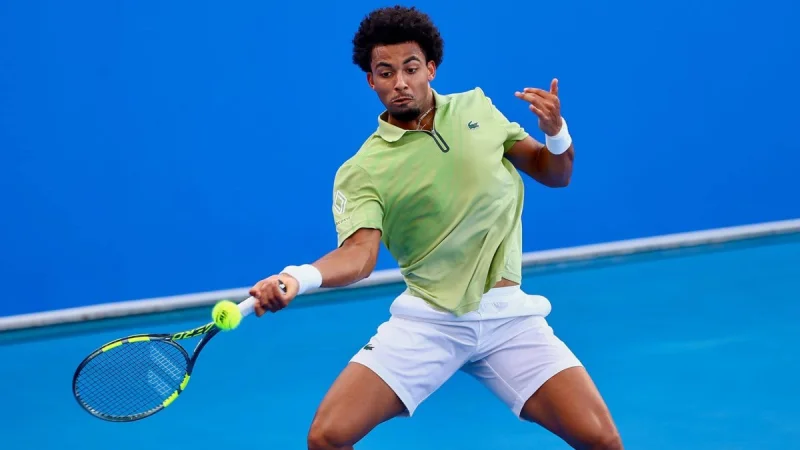
Rafa Jódar says he is ready to make his Wimbledon debut on Monday, and the 19-year-old Spaniard insists the attention around him is helping rather than weighing on him. After missing Queen’s and Eastbourne with abdominal discomfort, he said the break and gradual return left him prepared to play at 100% against Felix Gill.
That match was due at 12:00 Spanish time on Court 3, with Jódar, ranked 26th in the world, facing Gill, 24, who is 220th. For a player entering Wimbledon for the first time, the timing matters because the first round is also the first real test of whether the recovery that forced him out of Queen’s and Eastbourne has held up.
Jódar did not sound like someone trying to protect a fragile confidence. He said stopping was the right call, then built back up step by step, and the body had responded. “Era mejor parar y he ido poco a poco sacando más. Creo que ha sido acertado y estoy para jugar al 100%,” he said, framing the missed events as part of the process rather than a setback that had altered his plans.
The same tone runs through the way he talks about the spotlight. Spanish tennis has started to look at him more closely, especially with Carlos Alcaraz and Davidovich and the rest of the Spaniards forming the backdrop to his rise, but Jódar rejects the idea that this has turned into pressure. He said he has had good recent results, learned a great deal on clay, and sees the attention as motivation while his focus stays on improving as a player.
That message fits with a season he still describes as one for learning. Jódar said he spent a year at the University of Virginia before turning professional, a period that helped him mature personally and improve on court, and he credited his father and other trusted people with urging him to follow his own path instead of comparing himself with others. He said that kind of guidance matters now, when every result is being used to measure how fast he is moving.
There is also a reason his name has travelled quickly. Jódar said he has already felt the value of hard matches and quick lessons this year, and he treats media attention before tournaments as part of the job. That approach has already been visible in his rise, including the run that drew notice against Alex Michelsen at Roland Garros, and it is why this Wimbledon debut feels like more than a routine first round.
For now, the key question is not whether he feels watched. It is whether the recovery holds when the match starts. If it does, Jódar will walk onto Court 3 not as a player trying to explain himself, but as one trying to turn a first Wimbledon appearance into the next step of a career he says he is still building one match at a time.
