George Russell took pole position for the Austrian Grand Prix after Max Verstappen crashed in qualifying and turned the final runs into a scramble. Charles Leclerc ended up second and Lewis Hamilton third, with Ferrari left to watch Russell beat both cars after lifting for the yellow flag.
That mattered on Saturday at the Red Bull Ring because qualifying set the front of the grid for Sunday and the gap at the top was decided under pressure, not in clean air. Russell’s lap stood even after the yellow flag, while Kimi Antonelli finished fourth and Ferrari had to settle for P2 and P3.
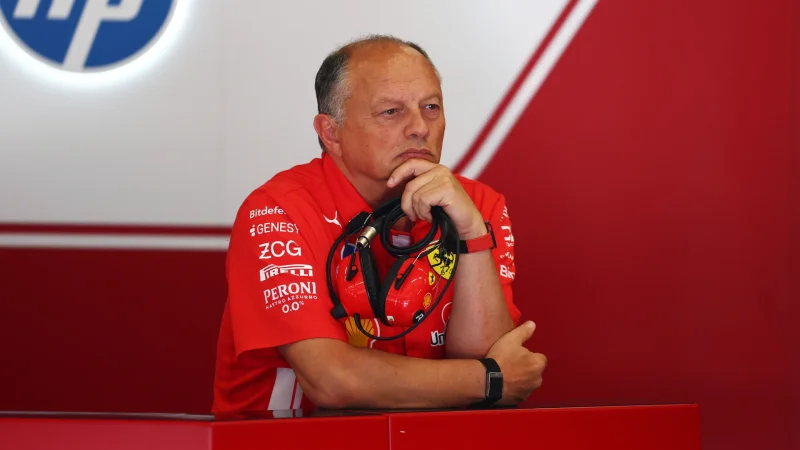
Fred Vasseur took the result as a mixed one. He said Ferrari were “second and third” and “in the fight with Mercedes in the Quali,” while also saying there were still “15 races to go” and that the most important thing remained performance. He added that Leclerc’s pace “was always there,” and pointed to the fact that the Monaco and Barcelona qualifying crashes had come when the Ferrari driver was already fighting near the front.
The sharper question came from the yellow flags after Verstappen’s crash at the penultimate corner. Vasseur accepted the decision from Race Control, but said the circumstances could have justified double yellow flags once the Medical Car was deployed. He also said there was no mini-sector data to prove whether Russell had reduced speed by five per cent or not, but that Ferrari had to trust Race Control. In his view, the debate was louder outside the garage than inside it.
There is still a clear next step from here: Sunday’s Austrian Grand Prix. Ferrari arrive with Leclerc and Hamilton on the second row of the front order, but Vasseur was blunt that Mercedes appears “a step ahead” for the race. He said even when Mercedes slow down, they are still faster than Ferrari, which leaves the pole position as more than a single lap and less than a guarantee.