


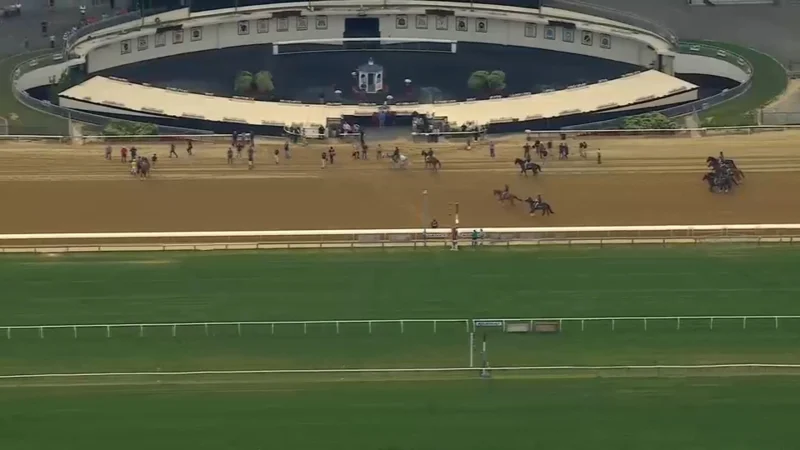
Aqueduct Racetrack will race for the final time on Sunday, ending a 132-year run that began in 1894 and closing the book on The Big A just as Belmont Park gets ready to reopen. For horse racing in New York, the handoff is immediate: one track goes dark, the other comes back to life.
That shift is why people are searching now. Belmont Park is scheduled to reopen on Sept. 18, and the new facility is meant to absorb the racing that no longer makes sense to split between two places owned and operated by the same entity just eight miles apart. Tom Durkin put it bluntly: “Times change, the business changes,” and he compared the setup to buying toilet paper on Amazon instead of driving to the store.

The numbers explain the decision better than nostalgia does. Belmont Park is a $455 million project on a 430-acre site in Elmont, with a 275,000-square-foot, five-level glass-enclosed grandstand designed by Populous. It will seat up to 9,000 fans and is built to handle up to 50,000 on the biggest racing days, including the annual Belmont Stakes and the 2027 Breeders' Cup. Aqueduct, by contrast, opened in 1894 as an unsanctioned six-race card on farmland once belonging to the Brooklyn Water Works, with cabbages and potatoes in the infield and room for only 2,000 fans. Its later life was more ambitious. The 1959 renovation, designed by Arthur Froehlich and Associates, cost $34.5 million, drew 42,473 people on Sept. 14, 1959 and added 18 escalators, an elevator, 20,000 outdoor seats, 14,000 seats in air-conditioned restaurants and lounges and 738 parimutuel windows.
That history is part of the sting. New York Racing Association once called Aqueduct “Racing's Wonder Track,” and Newsday described it as an architectural wonder with so much vastness that bettors could hide there from bookmakers and mothers-in-law. Yet the old promise of a modern track no longer fits the business reality around it. What was once sold as the future is now giving way to a newer one.
Sunday closes the racing chapter, but not the question of what comes after. The closure makes room for Belmont Park’s reopening, while the Aqueduct site waits for a plan that has not been fully laid out, leaving The Big A with a final card and an uncertain next act.
