


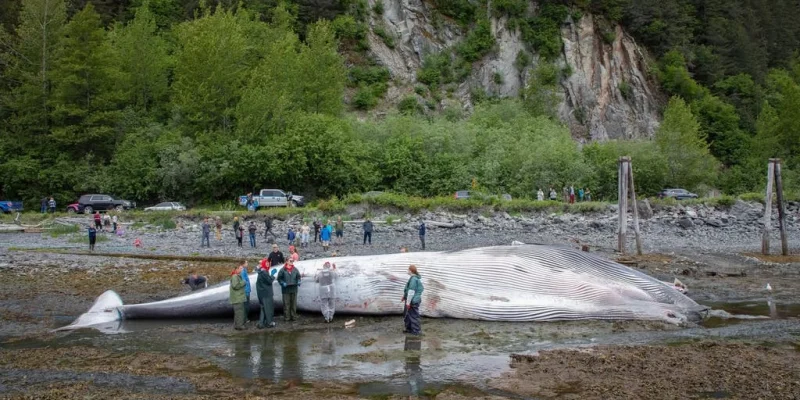
A dead 61-foot fin whale was found draped across the bow of a Royal Caribbean cruise ship after it docked in Seward on June 19, turning a routine arrival into a federal wildlife investigation. Officials said the whale strike was likely fatal, and scientists said the animal died from blunt-force trauma consistent with a collision.
The whale was pregnant. That detail deepened the concern around a case that was already visible in a way most ship strikes are not: the body was recovered on the ship itself, instead of disappearing beneath the surface. Scientists estimate vessels kill around 20,000 whales a year worldwide, but many collisions are never recorded because struck whales often sink and are never found.

Royal Caribbean said it was saddened to hear that one of its ships struck a whale on the way to Seward and said the incident was reported to the proper authorities immediately. The company said it was cooperating fully with NOAA and awaiting necropsy results. Those results remain the key piece of evidence now, because they should help answer how the whale died and how conclusive the collision evidence is.
The Alaska case lands in the middle of a much larger pattern. Vessel strikes are one of the leading causes of death for large whale species worldwide, and shipping now crosses 92 percent of whale ranges. Yet less than 7 percent of whale risk hotspots have management strategies in place to reduce collisions, a gap that leaves even well-known species such as blue whales, fin whales, humpback whales and North Atlantic right whales exposed as they move through feeding and migration waters.
Andrew Trites said the risk is only going to rise as more ships sail through the same waters where whales return to feed. His warning gets at the hardest part of this case: the whale on the bow made the death impossible to miss, but the broader mortality problem stays mostly out of sight. When a whale sinks after being hit, there may be no carcass, no bow, and no public reckoning at all. That is why the necropsy now matters so much. It may confirm the strike, but it will not solve the larger question that the Seward discovery has put back in view: how many whales are being killed where no one ever sees them.
