


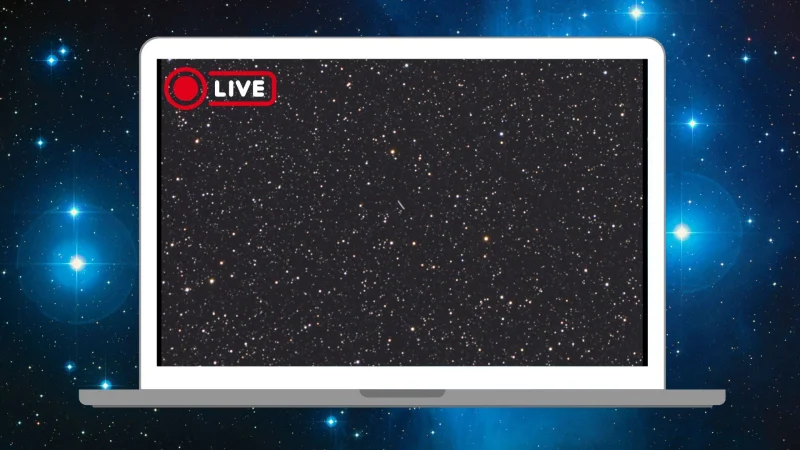
Asteroid 1997 NC1 is set to sweep past Earth on June 27, coming within seven lunar distances and reaching its closest point at 7:16 a.m. EDT. The Virtual Telescope Project will frame the encounter with two YouTube livestreams, one on June 26 and another on June 27, as the rock passes 1,594,339 miles away.
That is close enough to matter to skywatchers, but not close enough to threaten the planet. NASA puts 1997 NC1 at about 1,443 feet across and classifies it as potentially hazardous, yet says this week's flyby poses zero risk to Earth or the moon. At 19,879 mph, it will be moving fast enough to make the viewing window narrow, which is why the livestreams begin at 7 p.m. EDT on both nights and use robotic telescopes in Manciano, Italy, weather permitting.

The draw for observers is not just the distance but the brightness. NASA says a pair of 10x50 binoculars or a small 4-inch telescope should be enough to pick out 1997 NC1 as a point of light in Ophiuchus, with peak brightness expected at magnitude +10 at 8 p.m. EDT on June 27. Gianluca Masi, who leads the Virtual Telescope Project, described the encounter as a very important and interesting opportunity and said an asteroid of this size comes this close roughly once every ten years, which is why it is bright enough to be seen through small telescopes without being extraordinary enough to become an emergency.
The label “potentially hazardous” reflects the asteroid's size and the possibility of future close passes, not the path it is taking now. That is the friction at the center of this flyby: a large asteroid moving unusually near Earth, public enough to watch live, but still far beyond the range of danger. The timing also gives the event added weight, because the livestreams come just before World Asteroid Day on June 30, the annual United Nations-backed observance tied to the Tunguska impact of 1908, when an asteroid explosion over Siberia flattened millions of trees in an 830 square mile area.
For viewers, the next confirmed moment is the second livestream on June 27, followed by the asteroid's peak brightness later that evening. If the weather cooperates in Manciano, Italy, the public will get a rare live look at 1997 NC1 exactly when it is closest, brightest and easiest to catch through small telescopes.
