


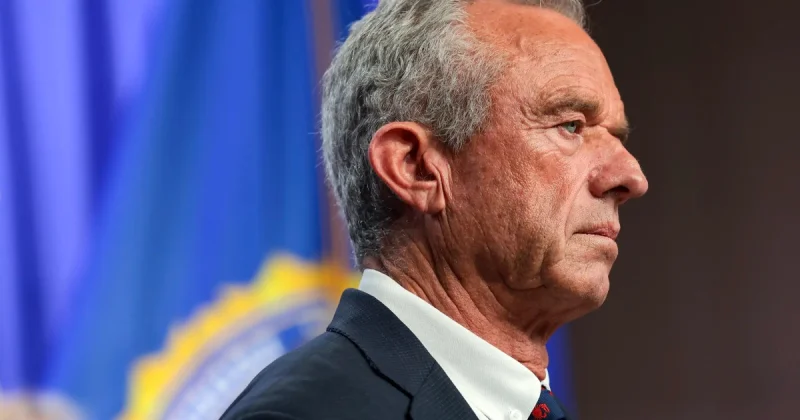
Robert F. Kennedy Jr. urged Iowa Libertarian congressional candidate Rick Stewart to drop out of Iowa's 2nd Congressional District race and suggested there could be something in it for him if he left. In a recorded call reported by The Washington Post, Kennedy told Stewart he was speaking as a liaison with the White House and argued that keeping Democrats from taking the House would help President Donald Trump's agenda.
The exchange matters because it puts a Cabinet secretary in the middle of a closely watched House race and raises the question of what, exactly, he was offering. Kennedy did not spell it out. He told Stewart he could not go into specifics because of legal prohibitions, then added that if Stewart wanted to talk about it, they could discuss the details later. He also floated the idea of making an agreement and said a campaign that was little more than a symbolic run was not the only option.

For Stewart, the pressure came with a broader pattern around Kennedy's recent political appearances. Last week, Kennedy headlined an event in Michigan with Republican Rep. Tom Barrett in one of the nation's most competitive congressional districts. Politico also reported that he urged a Libertarian in Iowa's 3rd Congressional District to drop out, and said he had appeared at events in Colorado, Wisconsin and Ohio. The picture that emerges is not of a detached cabinet official but of someone leaning into competitive races on behalf of Republicans.
That is where the friction lies. Kennedy is serving as Health and Human Services Secretary, yet the reported conversation suggests he was acting with one foot in government and the other in campaign politics. Ethics experts have already warned that such intervention can cross a line if favors are promised in exchange for withdrawal, and the legal risk depends on whether he made the call in his official capacity. Kennedy declined The Washington Post's request for comment and referred questions to a spokesperson, leaving the central question unanswered: what, precisely, was he prepared to help Stewart secure if the candidate stepped aside?
For now, the story lands on a simple fact with messy implications. Kennedy wanted Stewart out, and he appeared to be hinting that withdrawal could be rewarded. If that message was sent from the White House as a liaison or from a cabinet office wearing campaign colors, the distinction may decide how far this reaches next.
