


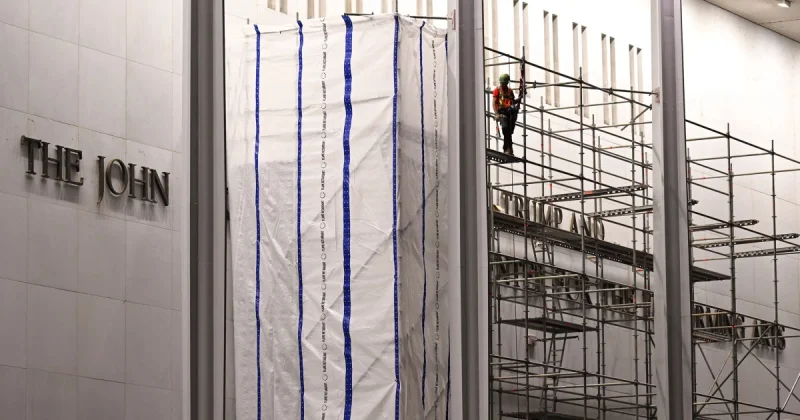
U.S. District Judge Christopher Cooper ordered the Kennedy Center parties on Wednesday to explain why a tarp and scaffolding are still up on the front portico of the building and to say what, if anything, they mean for the future of the site. He also set a deadline: a joint-status report is due by July 31 or within seven days of the Kennedy Center Board of Trustees meeting, whichever comes sooner.
The timing matters because the dispute over the Kennedy Center is still moving on two tracks at once. Cooper has already concluded that the board went beyond its authority when it renamed the Kennedy Center after President Trump, saying Congress gave the venue its name and only Congress can change it. At the same time, the administration has not persuaded an appeals court to leave Trump’s name on the building while that ruling is challenged, leaving litigation before both Cooper and the appeals court.

The new order goes beyond the visible covering on the façade. Cooper said the report must apprise the court of any pertinent factual developments tied to plans for future construction and operations at the Kennedy Center, a demand that raises the stakes of what might otherwise look like a simple maintenance question. In a case brought by Rep. Joyce Beatty, D-Ohio, the court is now asking not just whether the tarp is still there, but what it is doing there and whether it signals anything about what comes next.
Beatty said earlier this week that Trump and his co-defendants were still hanging a tarp over the Kennedy Center’s restored façade in petulant defiance. That description captured the friction inside the case: the administration is pressing ahead even as Cooper has already ruled that the name change was beyond the board’s power. The judge’s latest order puts that conflict back in plain view and forces a written answer on the portico cover that has become the most visible symbol of the fight.
What happens next is narrow but consequential. The parties must file the joint-status report by the deadline Cooper set, and that filing should reveal whether the tarp and scaffolding are temporary holdovers, part of a broader construction plan or a sign of changes in how the Kennedy Center will operate. For now, the court has turned a public eyesore into a deadline.
