


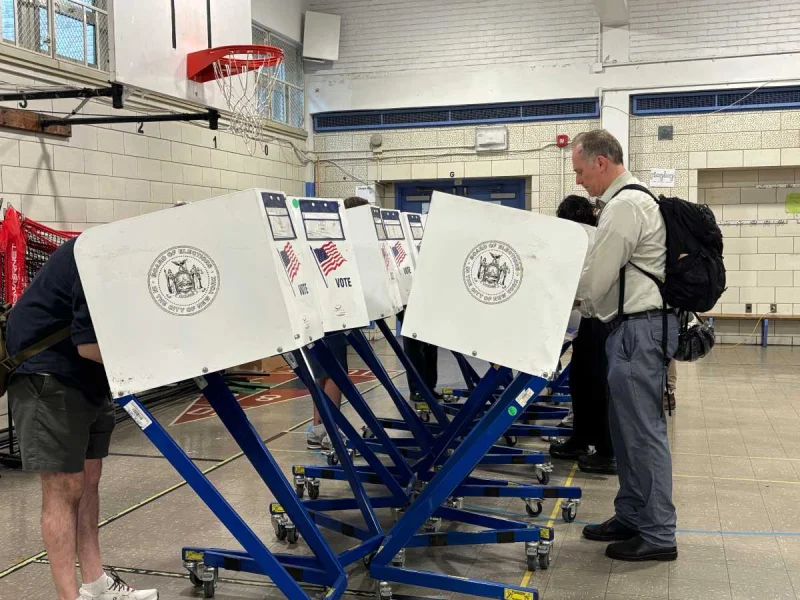
Brad Lander won the Democratic primary in New York’s 10th District, giving Zohran Mamdani his first victory of the evening and delivering a jolt to a race shaped by endorsements, money and a sharp message about what Democrats should stand for.
The result matters because New York voters were still being counted after polls closed and anyone in line by 9 p.m. was allowed to vote, turning election night into a live test of which campaigns could hold together when the ballots were finally reported. Lander said after his win that voters want a Democratic Party that is fighting harder, adding that Democrats should not be taking corporate PAC money from Wall Street, crypto, AI or AIPAC and should reset the U.S. relationship with Israel.
His victory comes as other New York contests were also moving to a call. The comptroller Democratic primary race was called, as was the comptroller Republican primary race, while in another congressional race Assemblyman Micah Lasher was leading Assemblyman Alex Bores by 5 percentage points with 64 percent of the votes in. Those returns are part of a night when the state’s congressional primaries were being watched closely, even though ranked-choice voting was not used in those races.

The 10th District result also carried a political edge beyond the ballot count. Brad Lander had the backing of Zohran Mamdani, while Dan Goldman’s defeat landed as a disappointment after he put more than $2 million into his campaign, according to Federal Election Commission records. The contrast underscored how far money and endorsements could go — and where they could fall short — in a race where the winner’s message was less about caution than confrontation.
That larger pattern was visible elsewhere in the broader election landscape too. Outside spending was a feature of several races, including about $730,000 in ads for Celeste Maloy in Utah’s Third District and about $1 million in ads for Ben McAdams in Utah’s First. The New York primary results suggest voters were not simply following the biggest bankroll or the loudest backing; they were deciding which candidate sounded most willing to fight.
For Lander, the immediate question is not whether he won — he did — but how much of the night’s unfinished count will change the final shape of the race once the remaining votes are fully reported. For now, the clearest answer is that his campaign turned an endorsement into an election-night result, and that was enough to make him the night’s first break for Mamdani and one of the clearest rebukes to a better-funded rival.
