


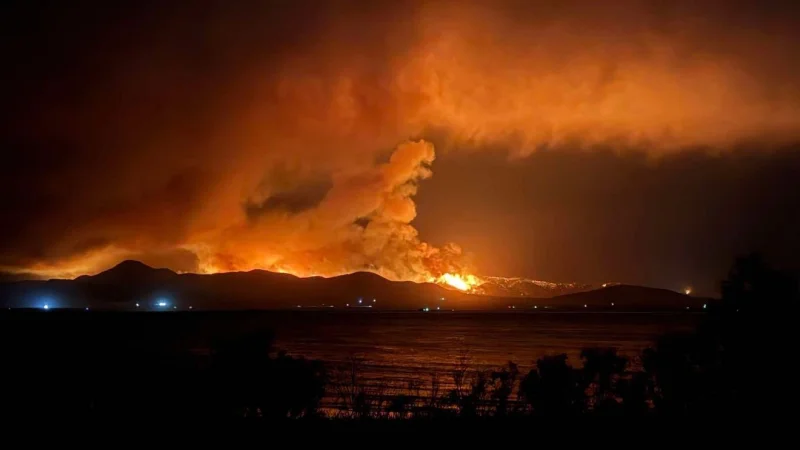
The Iron fire pushed into Eureka, Utah, on Saturday, forcing the evacuation of the town of about 1,000 people as flames spread across more than 2,000 acres in Juab county. People at a nearby ranch were also moved out, while officials said no homes had been lost.
That mattered on Sunday because the fire was still growing, and state officials were already treating the day as one of serious risk. Kelly Wickens said the blaze was continuing to expand in drought conditions and remained under investigation as a human-caused fire.
Utah Fire Info said firefighters carried out a successful operation to protect Eureka, a phrase that points to a fast-moving defensive fight rather than a fire brought under control. In practice, that meant holding the line around the town while the fire kept advancing nearby. Spencer Cox visited Eureka on Sunday and said, in effect, that the warning had proved real: there had been extreme fire danger, and multiple fires broke out anyway.

The wider picture only sharpened the pressure on crews. The Iron fire was one of six fires burning in Utah at different levels of containment, and much of the western US was dealing with above-average temperatures. Much of Utah was in severe to extreme drought, while parts of Arizona and Colorado were also under severe drought, conditions that help turn a spark into a fast-moving wildfire.
That is why the lack of structural damage stood out against the rest of the report. Eureka had been evacuated and the fire was still growing, yet no homes had been lost as of the report. The question now is not whether the town was threatened; it already was. It is how far the Iron fire will go before crews can force it to stop.
A separate wildfire near Sedona, Arizona, burned about 300 acres over the weekend and remained uncontained on Sunday afternoon, with evacuated residents still not allowed to return home. The pattern across the region was plain: the fire season in the western US had already turned into a series of live emergencies, and Eureka was one of them.
